


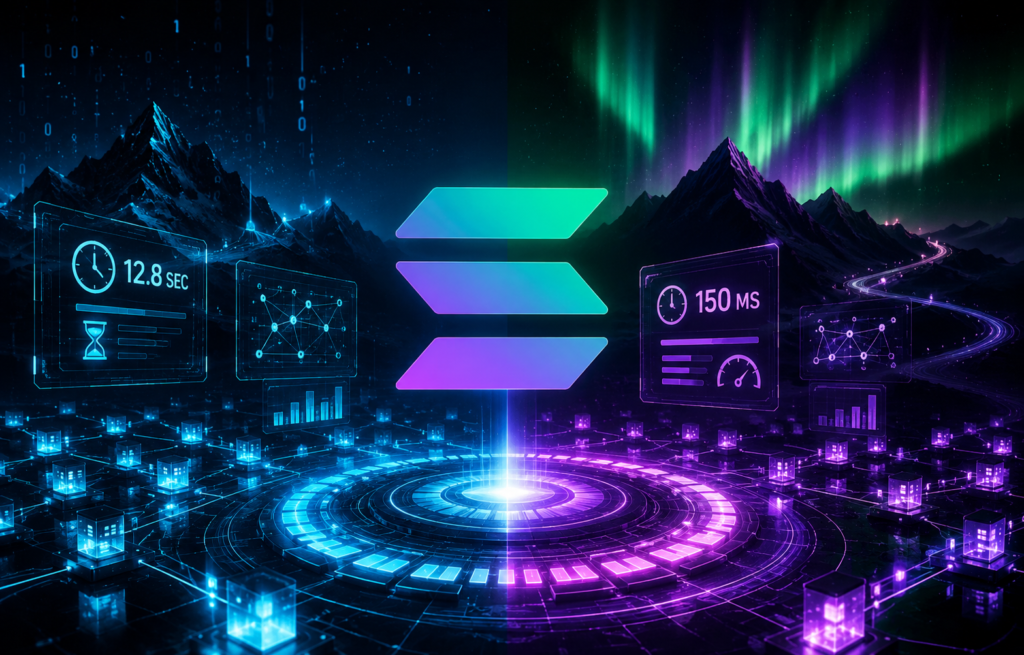
Solana is preparing for one of the most significant protocol upgrades in its history. Known as the Solana Alpenglow upgrade, the new consensus architecture aims to dramatically improve transaction finality while simplifying how validators reach agreement across the network.
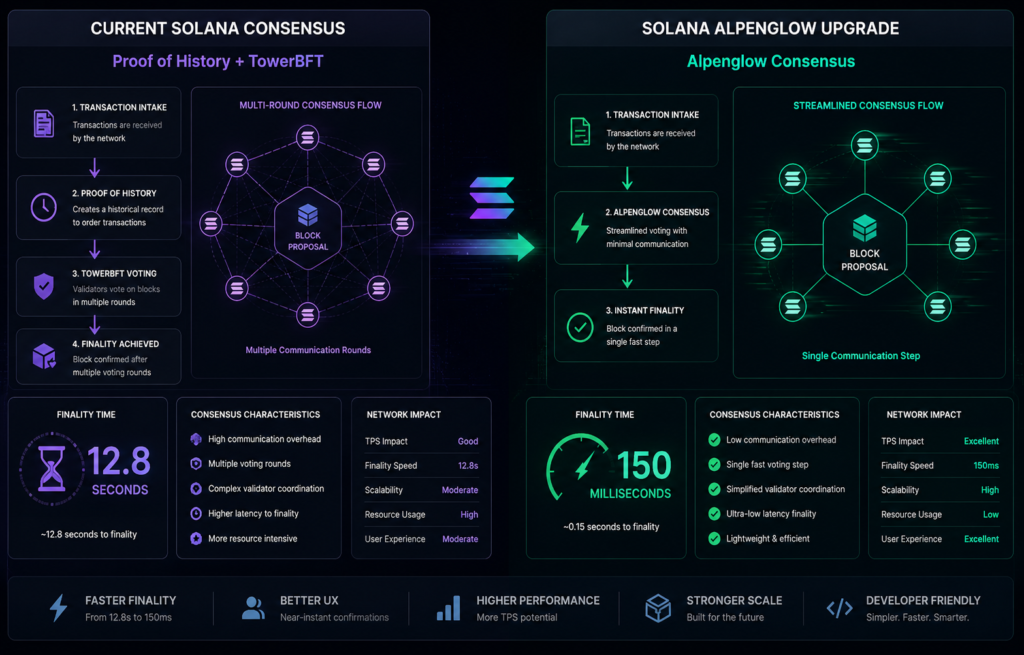
According to developers, Alpenglow replaces the long-standing Proof of History and TowerBFT consensus components with a redesigned architecture capable of reducing transaction finality from approximately 12.8 seconds to nearly 150 milliseconds. If successfully deployed, the upgrade could position Solana among the fastest decentralized blockchain networks available today.
Beyond speed improvements, the proposal reflects a broader effort to strengthen network efficiency, scalability, and validator coordination as decentralized applications continue expanding across the ecosystem.
Why Alpenglow Matters
Consensus mechanisms determine how blockchain participants verify transactions and agree on the current state of the network.
Since launch, Solana has relied on Proof of History combined with TowerBFT to process thousands of transactions while maintaining decentralization.
The Solana Alpenglow upgrade introduces a redesigned consensus model intended to simplify this process while reducing confirmation time.
Instead of focusing solely on increasing transaction throughput, the upgrade emphasizes faster settlement and improved communication between validators.
This could provide noticeable benefits for decentralized finance platforms, NFT marketplaces, blockchain gaming, and real-time payment applications.
Faster Finality Could Improve User Experience
Transaction finality refers to the point at which a blockchain transaction becomes irreversible.
Although Solana already processes transactions quickly, reducing finality even further could significantly improve user experience across numerous applications.
Potential advantages include:
- Faster decentralized exchange settlements
- Lower waiting times for NFT purchases
- Improved blockchain gaming responsiveness
- Quicker cross-chain interactions
- Better payment confirmation speeds
- Enhanced institutional trading efficiency
For developers building applications that require near real-time execution, lower finality can make blockchain interactions feel much closer to traditional web applications.
Validator Support Signals Strong Community Confidence
One notable aspect of the proposal is the overwhelming validator approval reported during governance discussions.
Strong validator participation demonstrates broad confidence that the upgraded architecture can improve performance while maintaining network security and decentralization.
Validators remain responsible for verifying transactions and protecting the blockchain against malicious activity.
Any major consensus upgrade must therefore balance speed with reliability, making community approval an important milestone before implementation.
How Alpenglow Differs From Previous Architecture
Rather than serving as a simple software update, Alpenglow introduces fundamental changes to how consensus operates.
Key improvements include:
- Simplified validator coordination
- Faster network communication
- Reduced transaction confirmation time
- More efficient consensus messaging
- Better scalability for future applications
These improvements could help Solana handle increasingly complex decentralized ecosystems without relying solely on hardware improvements.

What Developers and Investors Should Watch
Although faster finality represents the headline feature, developers will also monitor several technical factors after deployment.
Important areas include:
- Network stability
- Validator performance
- Smart contract compatibility
- Application migration
- Security testing
- Ecosystem adoption
Successful implementation could encourage additional decentralized applications to build on Solana while strengthening confidence among existing developers.
Investors may also view improved infrastructure as a positive long-term indicator, although blockchain upgrades do not automatically translate into immediate price appreciation.
Strengthening Solana’s Competitive Position
Layer-1 blockchain networks continue competing to deliver faster transactions, lower costs, and greater scalability.
Ethereum continues expanding through Layer-2 solutions, while networks such as Sui, Aptos, Avalanche, and Near Protocol are introducing their own performance improvements.
By redesigning its consensus mechanism, Solana aims to maintain its position as one of the industry’s leading high-performance blockchains.
Infrastructure improvements like Alpenglow also support growing institutional interest in blockchain technology by offering greater efficiency for enterprise-scale applications.
Final Thoughts
The Solana Alpenglow upgrade represents far more than a routine protocol update. It reflects a comprehensive redesign of how consensus is achieved across one of the cryptocurrency industry’s most active blockchain networks.
If the expected reduction in transaction finality from approximately 12.8 seconds to around 150 milliseconds is successfully delivered, developers, businesses, and users could benefit from faster application performance and smoother blockchain interactions.
As the rollout progresses, attention will remain focused on validator performance, network stability, and ecosystem adoption. While technical milestones rarely guarantee market outcomes, infrastructure improvements of this scale often play an important role in supporting long-term blockchain innovation.