


Key Takeaways
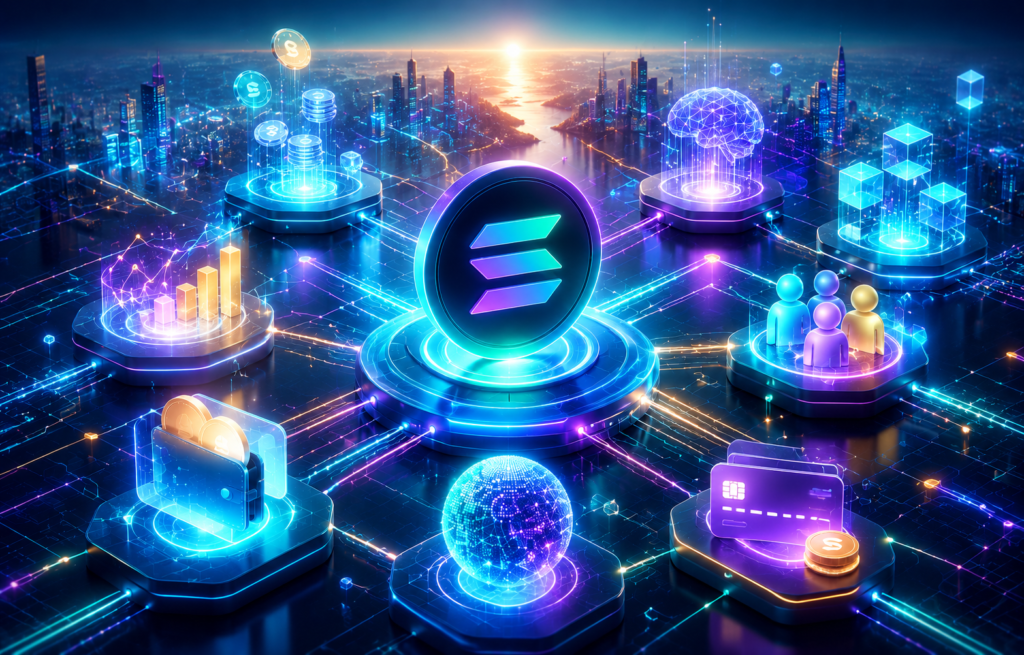
- Grayscale has identified several fast-growing application categories driving activity across the Solana ecosystem.
- The report points to growth in decentralized finance (DeFi), payments, decentralized physical infrastructure (DePIN), consumer applications, AI, and tokenized assets.
- According to Grayscale, Solana’s combination of network performance and expanding developer activity continues to attract new projects.
- The ecosystem’s growth reflects increasing adoption across multiple blockchain sectors rather than relying on a single use case.
The Solana ecosystem is continuing to expand beyond cryptocurrency trading, with new applications helping drive activity across decentralized finance, payments, artificial intelligence, and consumer-focused blockchain services.
In its latest market analysis, digital asset manager Grayscale highlighted several sectors that are contributing to Solana’s growing ecosystem. Rather than focusing only on token prices, the report emphasizes how developers are building applications that support real-world blockchain use cases and broader Web3 adoption.
As blockchain competition intensifies, ecosystem growth is increasingly measured by developer activity, user engagement, infrastructure, and application diversity and Solana continues to strengthen its position across these areas.
Multiple Application Categories Are Driving Growth
According to Grayscale’s analysis, Solana’s momentum is no longer tied to a single blockchain trend.
Instead, the network is benefiting from growth across multiple sectors, creating a more diversified ecosystem.
Some of the fastest-growing areas include:
- Decentralized Finance (DeFi)
- Consumer applications
- Blockchain payments
- Artificial intelligence (AI)
- DePIN projects
- Tokenized real-world assets (RWAs)
- Stablecoin infrastructure
The report suggests that expanding developer activity across these categories is helping strengthen Solana’s overall network utility.
DeFi Continues to Expand
Decentralized finance remains one of Solana’s largest application sectors.
Developers continue building products that support:
- Token swaps
- Lending
- Borrowing
- Liquid staking
- Yield strategies
- On-chain trading
As more users interact with these services, decentralized finance continues contributing significantly to network activity.
Rather than functioning as isolated applications, many DeFi protocols integrate with wallets, payment systems, and other blockchain services to create a connected ecosystem.
Consumer Applications Are Gaining Attention
Beyond financial services, Grayscale also pointed to the growing number of consumer-focused blockchain applications.
These projects include services designed for everyday blockchain users rather than only experienced traders or developers.
Examples include:
- Social platforms
- Creator tools
- Digital identity
- Consumer payment solutions
- Community applications
The continued expansion of consumer-facing products demonstrates how blockchain technology is gradually moving toward broader mainstream accessibility.
Payments Remain an Important Growth Area
Payments continue to be one of blockchain’s most practical use cases.
According to the report, Solana’s network characteristics make it suitable for payment-related applications that require efficient transaction processing.
Blockchain-based payment infrastructure supports activities such as:
- Peer-to-peer transfers
- Merchant payments
- Cross-border settlements
- Stablecoin transactions
As digital payment systems evolve, blockchain networks are increasingly being explored as complementary financial infrastructure.
AI and DePIN Continue to Attract Developers
Grayscale also highlighted the increasing interest in emerging sectors such as artificial intelligence and decentralized physical infrastructure networks (DePIN).
AI-focused blockchain projects are exploring:
- Autonomous software agents
- Decentralized computing
- AI-powered analytics
- Intelligent automation
Meanwhile, DePIN projects are using blockchain technology to coordinate real-world infrastructure, including wireless networks, computing resources, and mapping services.
These sectors represent some of the newest areas of blockchain innovation and continue attracting developer attention across the industry.
Ecosystem Diversity Supports Long-Term Development
Rather than depending on one category of applications, Solana’s ecosystem now spans multiple blockchain sectors.
This diversity allows different projects to complement one another.
For example:
- Wallets connect users to decentralized applications.
- Payment platforms integrate with stablecoins.
- DeFi protocols provide liquidity for other blockchain services.
- AI applications use blockchain infrastructure.
- Consumer applications expand everyday blockchain adoption.
The interaction between these sectors creates a stronger overall ecosystem than relying on a single use case.
Developer Activity Remains a Key Indicator
One of the report’s broader themes is the importance of developer participation.
Blockchain ecosystems typically grow as developers continue building new applications, infrastructure, and tools.
Rather than measuring success only through market performance, many industry observers also monitor factors such as:
- Active developers
- User growth
- Application launches
- Network activity
- Infrastructure expansion
These indicators provide a broader picture of ecosystem development beyond token price movements.
Why It Matters
Blockchain competition is increasingly shifting from individual cryptocurrencies to complete ecosystems.
Networks that attract developers, users, businesses, and infrastructure providers are often better positioned to support long-term innovation.
Grayscale’s report suggests that Solana’s expanding range of applications from DeFi and payments to AI and consumer products—continues to strengthen its role within the broader Web3 landscape.
As new sectors emerge and existing applications mature, ecosystem diversity may remain one of the most important factors influencing blockchain adoption.
Conclusion
Grayscale’s latest analysis highlights how Solana’s ecosystem is expanding across multiple blockchain sectors rather than relying on a single source of growth.
From decentralized finance and payment infrastructure to artificial intelligence, consumer applications, and DePIN projects, the report points to increasing developer activity and application diversity as important drivers of network adoption.
As blockchain technology continues evolving, the success of major ecosystems is likely to depend not only on transaction volumes but also on the breadth of applications they support and the communities building on top of them.