


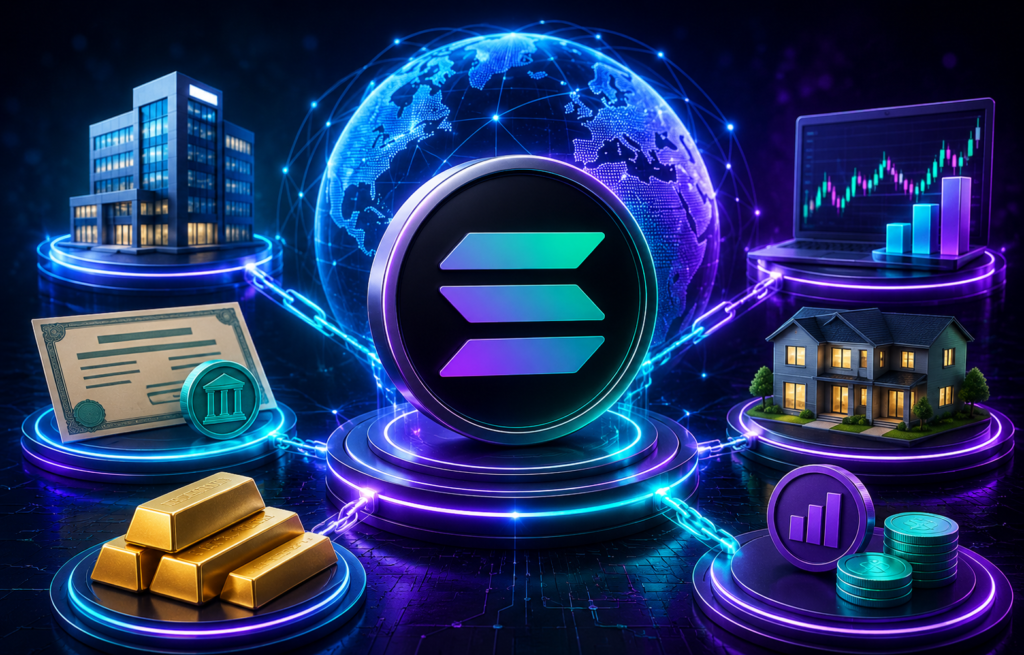
The Solana RWA ecosystem continues to strengthen its position in blockchain-based finance after surpassing 300,000 real-world asset (RWA) holders, marking another significant milestone for the network. The achievement reflects increasing interest in tokenized financial products as both retail users and institutions explore blockchain as a foundation for modern capital markets.
The announcement came as Solana highlighted another busy week across its ecosystem, pointing to developments ranging from Japanese tokenized equities to entertainment partnerships and continued expansion in on-chain real-world assets. While cryptocurrencies remain the foundation of blockchain adoption, RWAs are quickly becoming one of the industry’s fastest-growing sectors.
The latest milestone demonstrates that Solana is no longer competing solely as a high-performance blockchain but is increasingly establishing itself as an important platform for tokenized finance.
A New Milestone for Tokenized Assets
Real-world assets refer to traditional financial products represented on blockchain networks. These may include government bonds, stocks, private credit, real estate, commodities, and investment funds.
Unlike cryptocurrencies, these assets derive their value from existing financial instruments while benefiting from blockchain technology through faster settlement, improved transparency, and easier global accessibility.
Crossing 300,000 holders highlights growing participation rather than simply increasing asset value. It suggests more users are interacting with tokenized products, reinforcing Solana’s expanding role within decentralized finance.
The network has experienced steady adoption throughout the year as developers continue introducing new financial applications designed for both institutional investors and retail participants.
Institutional Adoption Continues to Expand
One of the biggest developments within the ecosystem has been growing institutional participation.
Recent activity includes the launch of tokenized financial products designed to bridge traditional capital markets with blockchain infrastructure. Financial firms are increasingly exploring blockchain networks to improve settlement efficiency while offering investors greater accessibility to regulated assets.
Unlike earlier blockchain cycles driven largely by speculation, today’s RWA market focuses on solving practical financial challenges. Faster settlement, lower operational costs, and greater transparency continue attracting attention from asset managers, banks, and fintech companies.
This shift demonstrates how blockchain technology is gradually moving beyond cryptocurrency trading into mainstream financial services.
Why Solana Is Attracting Developers
Several characteristics have helped Solana become one of the preferred blockchains for tokenized assets.
Among its advantages are:
- High transaction throughput
- Low network fees
- Fast settlement times
- Growing stablecoin liquidity
- Active developer ecosystem
These features allow financial applications to process transactions efficiently while keeping costs relatively low for users.
Developers also benefit from an expanding infrastructure that supports decentralized exchanges, lending protocols, payment applications, and tokenization platforms.
As more financial institutions explore blockchain integration, scalable infrastructure becomes increasingly important.
The Growing Role of Tokenized Equities
Another area where Solana continues gaining momentum is tokenized equities.
Instead of purchasing traditional shares through conventional brokerage systems, investors can gain blockchain-based exposure to certain financial assets through tokenized representations.
These digital assets enable:
- Faster settlement
- Fractional ownership
- Greater accessibility
- Around-the-clock trading opportunities
- Improved transparency
Although regulatory frameworks continue evolving across different jurisdictions, tokenized equities are widely viewed as one of the strongest long-term blockchain use cases.
Solana’s Ecosystem Continues Expanding
Beyond real-world assets, the Solana ecosystem has seen continued growth across multiple sectors.
Recent ecosystem updates have included partnerships involving digital entertainment, decentralized finance applications, developer tools, NFT innovation, and enterprise blockchain initiatives.
The combination of consumer applications and institutional finance demonstrates the versatility of the network.
Rather than relying on a single narrative, Solana continues expanding across several industries simultaneously, helping diversify its long-term growth potential.
Challenges Still Remain
Despite encouraging progress, the tokenized asset market remains in its early stages.
Several factors could influence future adoption:
- Regulatory developments
- Institutional compliance requirements
- Cross-border legal frameworks
- Liquidity for emerging tokenized assets
- Security and custody standards
Addressing these challenges will be essential as more financial institutions integrate blockchain technology into their operations.
However, continued investment from developers and growing institutional interest suggest the sector is steadily maturing.
Why This Milestone Matters
The growing number of RWA holders demonstrates that blockchain adoption is extending beyond cryptocurrency speculation.
Instead of focusing exclusively on digital currencies, users are beginning to interact with tokenized versions of familiar financial products. This evolution could reshape how assets are issued, traded, and settled across global markets.
As infrastructure improves, tokenized assets may become increasingly accessible to investors worldwide while reducing friction associated with traditional financial systems.
Final Thoughts
The Solana RWA ecosystem surpassing 300,000 holders represents more than another impressive statistic. It reflects growing confidence in blockchain-powered financial infrastructure and highlights the expanding role of tokenization within the broader digital asset industry.
With increasing institutional participation, continued developer activity, and a growing portfolio of tokenized products, Solana is positioning itself as one of the leading platforms for real-world asset innovation.
As financial markets continue embracing blockchain technology, milestones like this suggest that tokenization is gradually shifting from an emerging concept to a practical component of the future global financial system.