


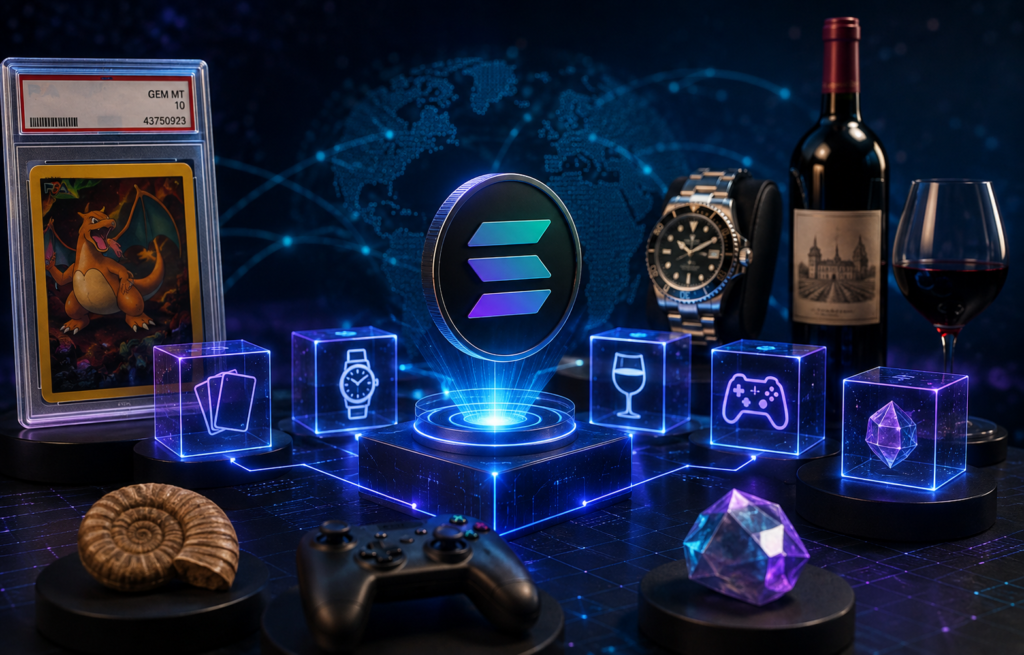
Solana tokenized collectibles are physical assets represented by blockchain tokens. Ownership changes on-chain while the authenticated item remains securely stored by a trusted custodian.
The Solana tokenized collectibles ecosystem is rapidly expanding as blockchain technology moves beyond digital assets into physical ownership. Solana recently showcased an ecosystem where trading cards, luxury watches, wine, fossils, and gaming collectibles can be represented on-chain while remaining securely stored with custodians.
The concept allows ownership to change hands within seconds without requiring the physical collectible to leave secure storage. This approach could significantly improve liquidity for high-value collectibles while reducing many of the logistical challenges associated with traditional buying and selling.
Key Highlights
- Solana highlighted an expanding ecosystem for tokenized physical collectibles.
- Assets such as trading cards, luxury watches, wine, fossils, and gaming collectibles can be traded on-chain.
- Physical items remain in secure custody while blockchain records ownership transfers.
- More than 40 ecosystem participants are supporting various collectible categories.
- The initiative reflects the growing adoption of real-world asset (RWA) tokenization.
Table of Contents
What Happened?
Solana presented an overview of its growing collectibles ecosystem, demonstrating how physical assets can be tokenized and traded through blockchain infrastructure.
One example featured a PSA 10 Charizard trading card. Instead of repeatedly shipping the collectible between buyers, ownership can be transferred digitally while the authenticated card remains safely stored by a custodian.
The announcement also highlighted multiple marketplaces and infrastructure providers supporting different categories, including trading cards, physical collectibles, gaming NFTs, luxury items, and digital assets.
Rather than replacing physical ownership, blockchain becomes the ownership registry, providing transparency and faster settlement.
How Solana Tokenized Collectibles Work
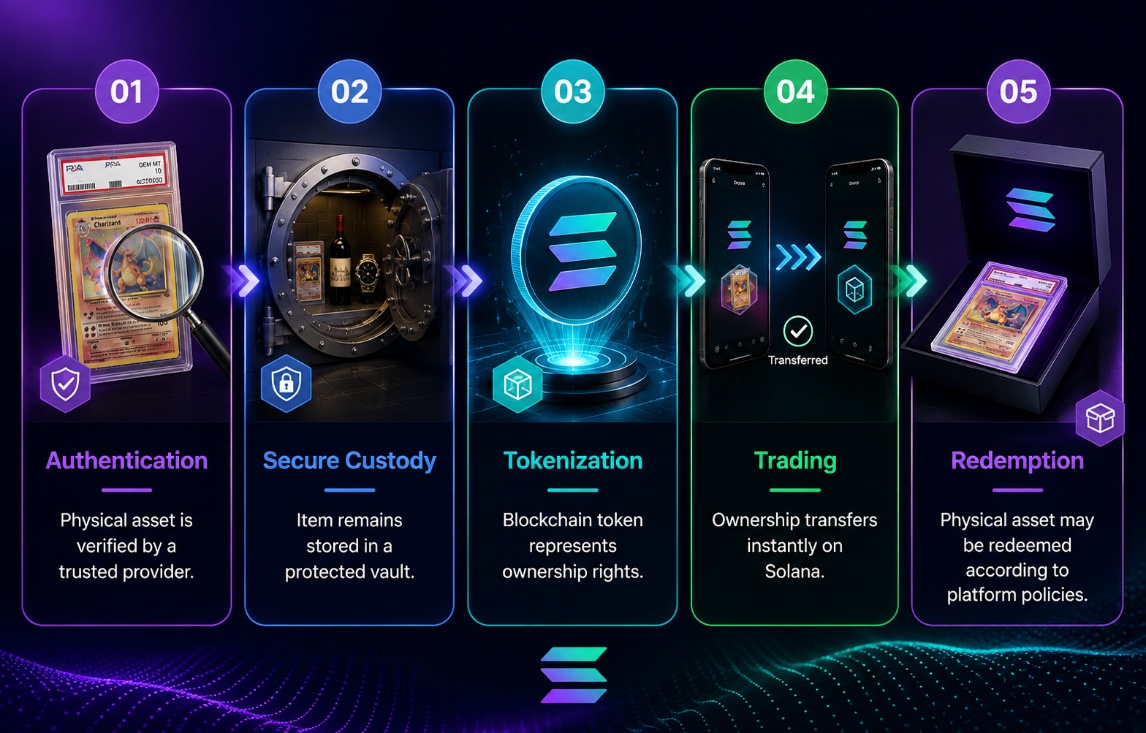
The process combines traditional asset custody with blockchain verification.
First, the physical collectible undergoes authentication before being securely stored by a trusted custodian.
A blockchain token representing ownership is then issued on Solana. When a buyer purchases the collectible, ownership of the token transfers almost instantly while the physical asset remains safely stored.
This model removes the need to repeatedly transport valuable items, reducing shipping risks, insurance costs, and settlement delays.
Why It Matters
The Solana tokenized collectibles initiative demonstrates how blockchain infrastructure is expanding into real-world assets beyond finance.
Traditional collectible markets often involve lengthy settlement periods, expensive shipping, and concerns about authenticity. Tokenization introduces greater efficiency by allowing buyers and sellers to exchange ownership digitally while maintaining confidence that the underlying asset remains securely stored.
The model also opens opportunities for international participation, allowing collectors to access global markets without physically transporting valuable items.
Supporting Data
According to Solana’s ecosystem overview:
- More than 40 projects are participating across multiple collectible categories.
- Supported assets include:
- Trading cards
- Luxury watches
- Wine collections
- Fossils
- Gaming collectibles
- Digital collectibles
- The ecosystem includes marketplaces, custody providers, and blockchain infrastructure supporting asset tokenization.
This expansion reflects growing interest in using blockchain technology for ownership records rather than purely speculative digital assets.
Market Context
Real-world asset tokenization has become one of blockchain’s fastest-growing sectors.
Financial institutions have increasingly explored tokenized bonds, treasury products, and private credit. Collectibles represent another category where blockchain can improve ownership transfer while preserving the value of authenticated physical assets.
For Solana, low transaction costs and high network throughput make the blockchain suitable for applications requiring frequent ownership changes.
Although the announcement focuses on ecosystem development rather than cryptocurrency prices, continued adoption of tokenized assets could strengthen Solana’s broader utility beyond decentralized finance and NFTs.
Industry Perspective
The initiative reflects a broader transition from speculative NFT markets toward practical blockchain applications.
Instead of creating entirely digital collectibles, tokenization links blockchain records with verified physical assets. This allows collectors to benefit from transparent ownership history while avoiding repeated handling of valuable items.
If adoption continues, tokenized collectibles may become an important segment of the expanding real-world asset ecosystem.
Opportunities & Risks
Opportunities
- Faster ownership settlement.
- Improved global market access.
- Transparent ownership history.
- Lower logistics costs.
- Enhanced liquidity for rare collectibles.
- Increased adoption of blockchain infrastructure.
Risks
- Dependence on trusted custodians.
- Regulatory uncertainty surrounding tokenized assets.
- Authentication standards across marketplaces.
- Market liquidity during early adoption.
- Operational risks if custody providers fail to maintain asset security.
What’s Next?
Several developments could shape the future of tokenized collectibles:
- Expansion into luxury fashion and jewelry.
- Fine art tokenization.
- Sports memorabilia marketplaces.
- Institutional participation.
- Improved interoperability between blockchain ecosystems.
- Greater integration with traditional auction houses.
As blockchain adoption continues growing, tokenized ownership could become increasingly common across many categories of physical assets.
Conclusion
The Solana tokenized collectibles ecosystem illustrates how blockchain technology is evolving beyond cryptocurrencies and traditional NFTs. By combining secure physical custody with instant digital ownership transfers, Solana is introducing a more efficient model for buying and selling valuable collectibles.
While challenges such as regulation, custody standards, and market adoption remain, the initiative highlights the growing role of blockchain in real-world asset tokenization. If adoption continues, collectors may increasingly view blockchain not simply as a speculative technology but as an infrastructure layer for secure and transparent ownership.
Frequently Asked Questions
What are Solana tokenized collectibles?
Solana tokenized collectibles are physical assets represented by blockchain tokens. Ownership changes on-chain while the authenticated item remains securely stored by a trusted custodian.
How do tokenized physical collectibles work?
A physical asset is verified, placed into secure custody, and linked to a blockchain token. When ownership changes, the blockchain record updates without moving the physical item.
Can trading cards be tokenized on Solana?
Yes. Solana’s ecosystem includes support for tokenized trading cards, allowing authenticated collectibles to be traded digitally while remaining safely stored.
What are the benefits of blockchain ownership?
Blockchain provides transparent ownership records, faster settlement, improved security, and broader access to global marketplaces.
What types of assets can be tokenized?
Besides trading cards, tokenization can support luxury watches, wine collections, fossils, sports memorabilia, artwork, gaming collectibles, and many other authenticated physical assets.