


Key Takeaways
- De.Fi says AI agents with wallets will soon move beyond conversations and begin executing financial transactions autonomously.
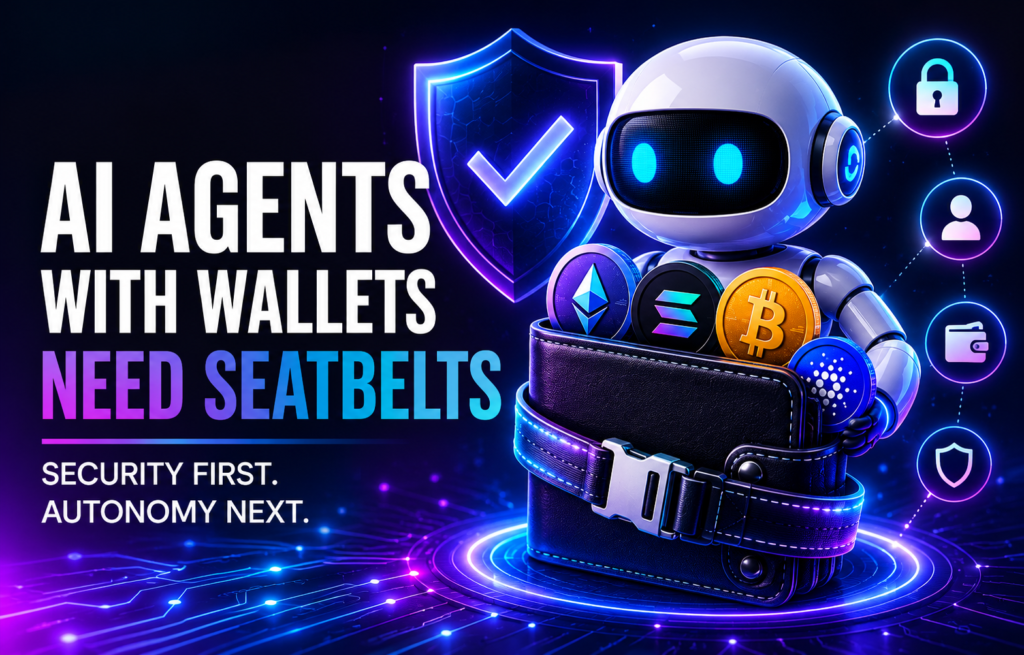
- The company argues stronger security safeguards or “seatbelts” are essential before AI agents can safely manage real assets.
- Future AI agents may negotiate, subscribe to services, swap tokens, bridge assets, and interact with smart contracts without direct user input.
- The discussion highlights the growing focus on balancing automation with on-chain security.
Artificial intelligence is rapidly evolving from answering questions to performing real-world financial tasks, and one Web3 security platform believes the industry needs to slow down long enough to improve safety.
In a recent post on X, De.Fi highlighted the growing role of AI agents with wallets, warning that autonomous financial agents should have stronger security protections before they begin managing users’ crypto assets.
The post referenced comments from De.Fi Tech Lead Artem, who described a future where AI agents are capable of moving from simple chat interactions to fully autonomous blockchain execution. According to the post, these agents could eventually negotiate agreements, pay subscriptions, swap digital assets, bridge tokens across networks, purchase data, renew services, and interact directly with smart contracts.
While the possibilities are exciting, De.Fi argues that giving AI direct access to digital wallets introduces an entirely new category of security risks.
AI Agents With Wallets Could Transform Web3
The idea behind AI agents with wallets is straightforward but powerful.
Instead of simply responding to prompts, next-generation AI assistants could independently complete blockchain transactions after receiving user authorization. Rather than asking users to manually approve every action, future AI agents may be capable of handling routine financial operations on their behalf.
Potential examples include:
- Paying recurring subscriptions
- Executing token swaps
- Bridging assets between blockchain networks
- Purchasing digital services
- Managing decentralized finance (DeFi) positions
- Interacting with smart contracts
- Automating on-chain workflows
Supporters believe this could significantly improve user experience by reducing repetitive tasks while making blockchain applications easier to use.
Why De.Fi Says AI Agents Need ‘Seatbelts’
Although automation promises greater convenience, De.Fi believes security must evolve at the same pace.
In its social media post, the company compared security protections for AI agents with wallets to “seatbelts” in a vehicle. The message suggests that while autonomous AI may become increasingly capable, guardrails are needed to prevent mistakes, unauthorized transactions, or malicious exploitation.
Unlike traditional AI chatbots, wallet-enabled agents could potentially control assets with real financial value. That means errors, compromised permissions, or poorly designed workflows could have direct economic consequences for users.
As a result, security measures such as permission controls, transaction limits, authentication layers, and continuous monitoring are expected to play a critical role as autonomous blockchain applications mature.
AI Is Moving From Conversation to Execution
According to Artem’s comments shared by De.Fi, AI agents are quickly progressing beyond conversational interfaces.
Instead of simply answering questions or generating content, future systems may become active participants in blockchain ecosystems by carrying out instructions across decentralized applications.
This shift from conversation to execution represents one of the most significant developments in the intersection of artificial intelligence and Web3.
Rather than opening multiple apps or manually signing every transaction, users could eventually delegate many routine blockchain activities to trusted AI assistants operating within predefined permissions.
Security Could Become the Biggest Challenge
The discussion surrounding AI agents with wallets also highlights one of the industry’s largest upcoming challenges: balancing automation with security.
As AI gains greater control over financial operations, developers will likely need to build stronger safeguards around:
- Wallet permissions
- Transaction approvals
- Identity verification
- Smart contract interactions
- Risk monitoring
- Fraud detection
- Emergency controls
Industry participants have increasingly emphasized that security frameworks should evolve alongside AI capabilities instead of being added after widespread adoption.
The Industry Is Preparing for Autonomous Finance
Major blockchain projects, wallet providers, and infrastructure companies are actively exploring AI-powered automation.
Developers envision AI assistants capable of helping users manage portfolios, optimize transactions, execute trades, monitor decentralized finance positions, and simplify complex blockchain interactions.
However, many experts also agree that autonomous financial systems require robust security, transparency, and user control before they can be trusted with significant digital assets.
The latest comments from De.Fi contribute to that broader industry conversation by emphasizing responsible innovation rather than rapid deployment alone.
What This Means for Crypto Users
For everyday users, AI agents with wallets could eventually change how people interact with blockchain technology.
Instead of manually navigating multiple decentralized applications, users may rely on intelligent assistants to complete routine financial tasks more efficiently.
At the same time, wallet security is likely to become even more important as AI systems gain greater autonomy. Features such as customizable spending limits, multi-factor authentication, transaction simulation, and real-time monitoring could become standard components of future AI-powered wallets.
The technology continues to evolve, but the message from De.Fi is clear: innovation should be matched by equally strong security protections.
Conclusion
The conversation around AI agents with wallets reflects one of the next major frontiers in Web3 development.
According to De.Fi’s latest comments, autonomous AI may soon handle payments, token swaps, subscriptions, and smart contract interactions on behalf of users. While that future could dramatically improve convenience, the company believes strong security “seatbelts” should be in place before AI begins managing real financial assets.
As blockchain and artificial intelligence continue to converge, finding the right balance between automation, usability, and security will likely remain a key priority for developers and users alike.