



Key Takeaways
- iGaming refers to all forms of online gambling, including casino games, sports betting, poker, bingo, lotteries, and emerging blockchain-based gaming platforms.
- The industry has evolved from simple desktop casino websites into a global digital ecosystem powered by mobile apps, live streaming, artificial intelligence, and cryptocurrency payments.
- Modern iGaming platforms prioritize convenience, offering players access to thousands of games from virtually anywhere with an internet connection.
- Choosing a licensed and reputable operator is essential for player protection, fair gameplay, and secure transactions.
- Technologies such as blockchain, AI, and Web3 are reshaping the future of online gambling by improving transparency, personalization, and payment efficiency.
Quick Facts About iGaming
| Category | Details |
|---|---|
| Industry | Online Gambling |
| First Online Casino | Mid-1990s |
| Popular Categories | Online Casinos, Sports Betting, Poker, Bingo, Lottery |
| Common Payment Methods | Cards, Bank Transfer, E-wallets, Cryptocurrency |
| Technologies Used | RNG, Live Streaming, AI, Blockchain, Cloud Computing |
| Available On | Desktop, Mobile, Tablet |
| Regulation | Varies by Country |
| Beginner Friendly | Yes, with responsible gambling practices |
What Is iGaming?
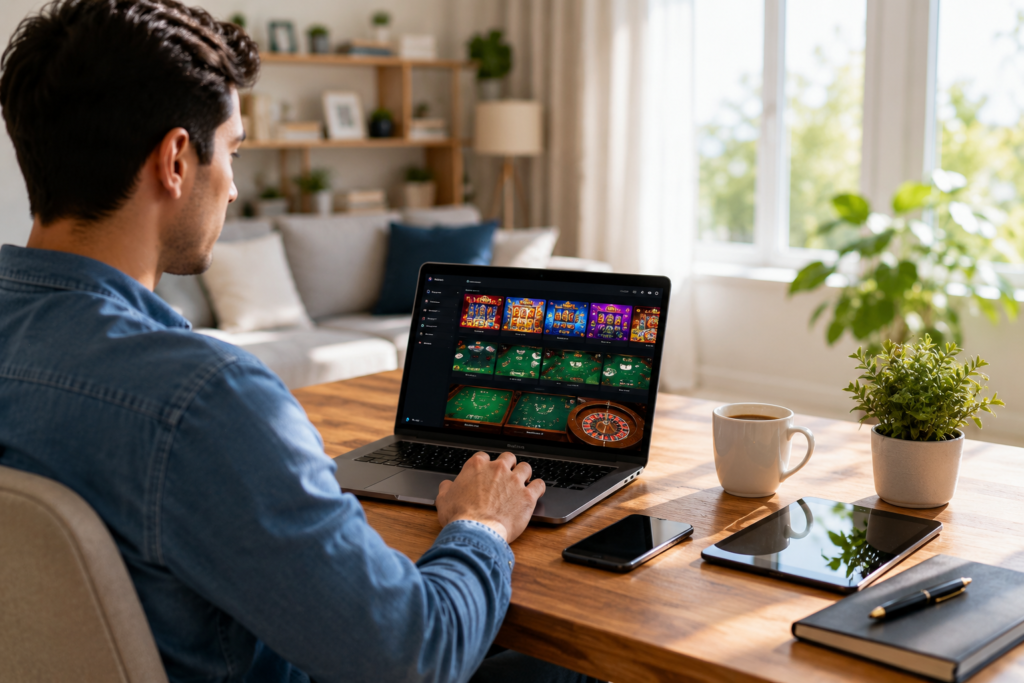
Imagine walking into a world-class casino without leaving your living room.
Instead of traveling to a physical venue, waiting for a table, or carrying cash, you simply open an app or website, choose your preferred game, and begin playing within seconds. That convenience is the foundation of iGaming.
The term iGaming, short for interactive gaming, refers to every form of gambling conducted over the internet. It includes online casino games, sports betting, poker, bingo, lotteries, fantasy sports, and several newer formats that have emerged alongside blockchain technology and digital payments.
Unlike traditional casinos, which operate from physical locations, iGaming platforms deliver entertainment through websites and mobile applications. Players can register, fund an account, participate in games, and withdraw winnings without visiting a casino floor.
Over the past two decades, the industry has grown from a niche internet service into one of the world’s fastest-evolving digital entertainment sectors. Advances in mobile technology, faster internet connections, secure payment systems, and live-streaming have transformed how millions of people interact with online gaming platforms.
Today, many operators offer experiences that closely resemble physical casinos. Live dealer tables stream in real time from professional studios, multiplayer poker rooms connect participants from different countries, and sportsbooks provide live odds that update during sporting events.
For players, the appeal lies in accessibility and variety. A single platform may provide thousands of slot games, dozens of table games, live casino experiences, esports betting, and cryptocurrency payment options all accessible through one account.
At the same time, the industry continues to evolve. Artificial intelligence is improving personalization, blockchain is increasing transparency, and cryptocurrency is enabling faster cross-border transactions. These innovations are reshaping not only how people play but also how operators build and manage their platforms.
Understanding these developments helps explain why iGaming has become much more than simply “gambling online.” It now represents a sophisticated digital ecosystem combining entertainment, technology, finance, and user experience.

iGaming vs Traditional Gambling
Although both involve wagering money on games or events, the experience differs significantly.
| Traditional Gambling | iGaming |
|---|---|
| Physical casino required | Accessible online |
| Limited opening hours | Available 24/7 |
| Travel required | Play from home or on mobile |
| Cash and chips commonly used | Digital payments and crypto supported |
| Limited game selection | Thousands of games on one platform |
| Local player base | Global player community |
The biggest difference isn’t simply location it’s flexibility.
An online platform allows players to switch from a football match to a live blackjack table, then to a poker tournament or crash game without changing venues. This variety has become one of the industry’s defining strengths.
Why Is iGaming Growing So Quickly?
The growth of iGaming hasn’t happened by chance. Several technological and consumer trends have contributed to its rapid expansion.
Convenience Comes First
People increasingly expect entertainment to be available whenever they want it.
Just as streaming services changed how people watch films, iGaming has changed how many people access casino games and sports betting. Players no longer need to plan a trip to a casino or bookmaker they can participate from almost anywhere with an internet connection.
Mobile Devices Changed Everything
The widespread adoption of smartphones has made online gambling significantly more accessible.
Modern platforms are optimized for mobile devices, allowing users to place sports bets, join live dealer games, or spin slot reels with only a few taps.
For many operators, mobile traffic now accounts for the majority of player activity.
Technology Improved the Experience
Earlier online casinos offered relatively simple graphics and limited interaction.
Today’s platforms include:
- High-definition live dealer games
- Real-time multiplayer experiences
- Instant payment processing
- Personalized recommendations
- Interactive tournaments
- Cross-device synchronization
These improvements have helped narrow the gap between online and land-based gaming.
More Payment Options
Players today can choose from numerous payment methods, including:
- Credit and debit cards
- Bank transfers
- Digital wallets
- Prepaid vouchers
- Cryptocurrencies
This flexibility has made online platforms more accessible to users in different regions.
Regulation Has Increased Trust
Many jurisdictions now license and supervise online gambling operators.
Licensed platforms are generally required to meet standards related to:
- Fair gaming
- Responsible gambling
- Player fund protection
- Security
- Identity verification
Greater regulatory oversight has helped improve confidence in the industry.
The Evolution of iGaming: From Simple Websites to a Global Digital Industry
The iGaming industry didn’t become a multi-billion-dollar market overnight. Its growth has been driven by advances in internet technology, digital payments, mobile devices, and changing consumer habits.
What began as a handful of online casino websites in the mid-1990s has evolved into a sophisticated ecosystem that serves millions of players worldwide through websites and mobile applications.
Understanding this journey helps explain why today’s platforms look and operate very differently from their early predecessors.
The First Generation: Online Casinos Arrive
The first online casinos appeared during the early days of the commercial internet. Compared to today’s standards, they were extremely simple.
Most offered only a small collection of games, including:
- Blackjack
- Roulette
- Basic slot machines
- Video poker
Players accessed these games through desktop computers, internet speeds were slow, and payment options were limited. Graphics were basic, and the overall experience felt more like playing software than visiting a real casino.
Even with these limitations, the concept proved popular because it gave players something land-based casinos couldn’t the ability to play from home at any time.
Better Internet Changed Everything
As broadband internet became widely available, developers could create more advanced gaming experiences.
This period introduced several improvements:
- Higher-quality graphics
- Faster game loading
- More stable multiplayer games
- Improved account security
- Larger game libraries
Competition among operators also increased, encouraging companies to invest more heavily in user experience and game variety.
Smartphones Opened a New Era
The launch of smartphones fundamentally changed the iGaming industry.
Instead of waiting until they reached a computer, players could now:
- Check sports odds while commuting
- Join poker tournaments from home
- Watch live dealer games on tablets
- Deposit funds instantly through mobile banking
Today, mobile devices generate a significant share of traffic for many online gambling platforms.
Rather than designing desktop websites first, many operators now follow a mobile-first approach, ensuring games perform smoothly across different screen sizes.
Live Dealer Games Brought Casinos Online
One of the biggest innovations in modern iGaming is the rise of live dealer gaming.
Instead of relying entirely on computer-generated graphics, players connect to real casino studios where professional dealers host games in real time.
Popular live dealer games include:
- Blackjack
- Roulette
- Baccarat
- Poker variants
- Game shows
Multiple camera angles, live chat, and high-definition video help recreate the atmosphere of a traditional casino while allowing players to participate remotely.
This combination of convenience and realism has become one of the industry’s strongest attractions.
Cryptocurrency Changed Online Payments
The introduction of cryptocurrencies added another important chapter to iGaming’s evolution.
Many operators now accept digital assets such as Bitcoin, Ethereum, and stablecoins alongside traditional payment methods.
For players, crypto payments may offer:
- Faster deposits
- Faster withdrawals
- Lower international transfer costs
- Greater flexibility for cross-border transactions
Not every operator accepts cryptocurrency, and availability depends on local regulations, but digital assets have become an increasingly common payment option across the industry.
Artificial Intelligence Is Personalizing the Experience
Artificial intelligence is now influencing many aspects of modern iGaming.
Rather than replacing human interaction, AI is often used to improve the overall player experience.
Examples include:
- Personalized game recommendations
- Customer support chatbots
- Fraud detection
- Bonus optimization
- Responsible gambling monitoring
- Risk management
As AI technology continues advancing, its role within online gaming platforms is expected to expand further.
Types of iGaming
Many people associate iGaming exclusively with online casinos, but the industry includes a wide variety of entertainment options.
Each category serves a different audience while sharing the same digital infrastructure.
Online Casinos
Online casinos remain the largest segment of the iGaming industry.
Instead of visiting a physical casino, players access games through a website or mobile application.
Typical game categories include:
- Slot games
- Blackjack
- Roulette
- Baccarat
- Poker variants
- Live dealer games
- Instant-win games
Many platforms also feature tournaments, loyalty programs, and promotional offers that enhance the overall experience.
Sports Betting
Sports betting allows users to place wagers on sporting events before or during a match.
Markets commonly cover:
- Football
- Cricket
- Tennis
- Basketball
- Horse racing
- Mixed martial arts
- Formula 1
Modern sportsbooks provide live odds that update as games progress, giving players additional betting opportunities throughout an event.
Online Poker
Poker remains one of the most skill-based forms of iGaming.
Unlike many casino games, players compete against one another rather than against the house.
Popular formats include:
- Texas Hold’em
- Omaha
- Sit & Go tournaments
- Multi-table tournaments
- Cash games
Online poker platforms also support international competitions featuring participants from multiple countries.
Bingo
Bingo has successfully transitioned into the online world.
Digital platforms now offer:
- Traditional bingo rooms
- Themed events
- Community chat features
- Scheduled tournaments
Its social nature continues to make it popular among casual players.
Online Lottery
Many licensed operators allow users to purchase entries for lottery draws through digital platforms.
Depending on local regulations, players may access:
- National lotteries
- International jackpot games
- Instant-win lottery products
Fantasy Sports
Fantasy sports combine sports knowledge with strategic team management.
Participants build virtual teams based on real athletes, earning points according to actual match performances.
This category has experienced significant growth in several markets over the past decade.
Esports Betting
Competitive gaming has become another major segment of iGaming.
Popular esports betting markets include tournaments featuring games such as:
- Counter-Strike
- Dota 2
- League of Legends
- Valorant
As esports audiences continue expanding, betting activity has grown alongside professional competitions.
Crash Games
Crash games represent one of the newest categories within online gaming.
These games involve a multiplier that increases over time until it suddenly ends.
Players decide when to exit before the multiplier “crashes,” introducing a fast-paced gameplay style that has gained popularity in recent years.
Comparison of Major iGaming Categories
| Category | Skill Level | Popularity | Typical Session Length |
|---|---|---|---|
| Online Casino | Low–Medium | Very High | Short to Medium |
| Sports Betting | Medium | Very High | Event Based |
| Poker | High | High | Medium to Long |
| Bingo | Low | Medium | Medium |
| Lottery | Very Low | High | Very Short |
| Fantasy Sports | Medium–High | Growing | Season Based |
| Esports Betting | Medium | Growing | Event Based |
| Crash Games | Low | High | Very Short |
Which Type Is Best for Beginners?
For someone completely new to iGaming, there’s no universal “best” category.
The right choice depends on personal interests.
For example:
- Sports fans often begin with sports betting because they already understand the games.
- Casino enthusiasts may prefer roulette, blackjack, or slot games.
- Players who enjoy strategy frequently gravitate toward poker.
- Those seeking casual entertainment may find bingo or lottery games more approachable.
Regardless of the format, understanding the rules and choosing licensed platforms are important first steps.
📌 Key Takeaways
- iGaming has evolved from basic online casino websites into a sophisticated digital entertainment industry.
- Mobile technology, live dealer games, AI, and cryptocurrency have significantly expanded how players interact with online platforms.
- The industry includes much more than online casinos, encompassing sports betting, poker, bingo, lotteries, fantasy sports, esports betting, and newer game formats.
- Different categories appeal to different types of players, making variety one of iGaming’s greatest strengths.
How iGaming Works: From Registration to Your First Game
From a player’s perspective, using an online casino or sportsbook feels simple. Create an account, make a deposit, choose a game, and start playing.
Behind that smooth experience, however, is a sophisticated technology stack involving payment gateways, gaming servers, security systems, software providers, and compliance checks—all working together in real time.
Understanding this process helps players make informed decisions and appreciate why licensed platforms invest heavily in security and fairness.
Step 1: Creating an Account
The journey begins with registration.
Most iGaming platforms ask users to provide basic details such as:
- Full name
- Email address
- Date of birth
- Country of residence
Some operators may also request a mobile number for additional account security.
The registration process typically takes only a few minutes, after which players can access the platform’s lobby and explore available games.
Step 2: Identity Verification (KYC)
Many regulated operators require users to verify their identity before accessing certain features or requesting withdrawals.
This process, commonly known as Know Your Customer (KYC), helps platforms comply with financial regulations and protect users.
Verification may involve:
- Government-issued ID
- Proof of address
- Selfie verification
- Payment method confirmation
Although some players view KYC as inconvenient, it plays an important role in preventing fraud, underage gambling, and identity theft.
Not every platform follows the same process. Some crypto-focused casinos operate with simplified registration depending on their licensing jurisdiction and local regulations.
Step 3: Funding Your Account
Once the account is ready, players can deposit funds using one of several payment methods.
Common options include:
Traditional Payments
- Debit cards
- Credit cards
- Bank transfers
Digital Wallets
- Skrill
- Neteller
- PayPal (where supported)
Cryptocurrency
Increasingly, platforms also accept digital assets such as:
- Bitcoin (BTC)
- Ethereum (ETH)
- Tether (USDT)
- Litecoin (LTC)
- Solana (SOL)
Crypto payments have become popular because they can simplify international transfers and often reduce processing times, although availability depends on the operator and local regulations.
Step 4: Choosing a Game
After funding an account, players enter the platform’s game library.
A modern iGaming platform may offer thousands of titles across multiple categories, including:
- Video slots
- Blackjack
- Roulette
- Baccarat
- Poker
- Live casino games
- Sports betting
- Instant games
- Crash games
Most operators organize games by category, provider, popularity, or volatility, making it easier for users to discover new content.
Step 5: Playing the Game
Once a game is selected, different technologies come into play depending on the format.
For slot games, software instantly generates outcomes using certified algorithms.
For live dealer games, players connect to a real studio where professional dealers operate physical gaming equipment while high-definition cameras stream the action.
Sportsbooks continuously update betting markets using real-time data feeds from sporting events around the world.
Despite these differences, the experience is designed to feel seamless from the player’s perspective.
Step 6: Withdrawing Funds
If a player decides to withdraw available funds, the request typically passes through several checks before being processed.
Depending on the platform, these checks may include:
- Identity verification
- Security reviews
- Payment confirmation
- Anti-fraud monitoring
Processing times vary based on the payment method and operator policies.
Behind the Scenes: The Technology That Powers iGaming
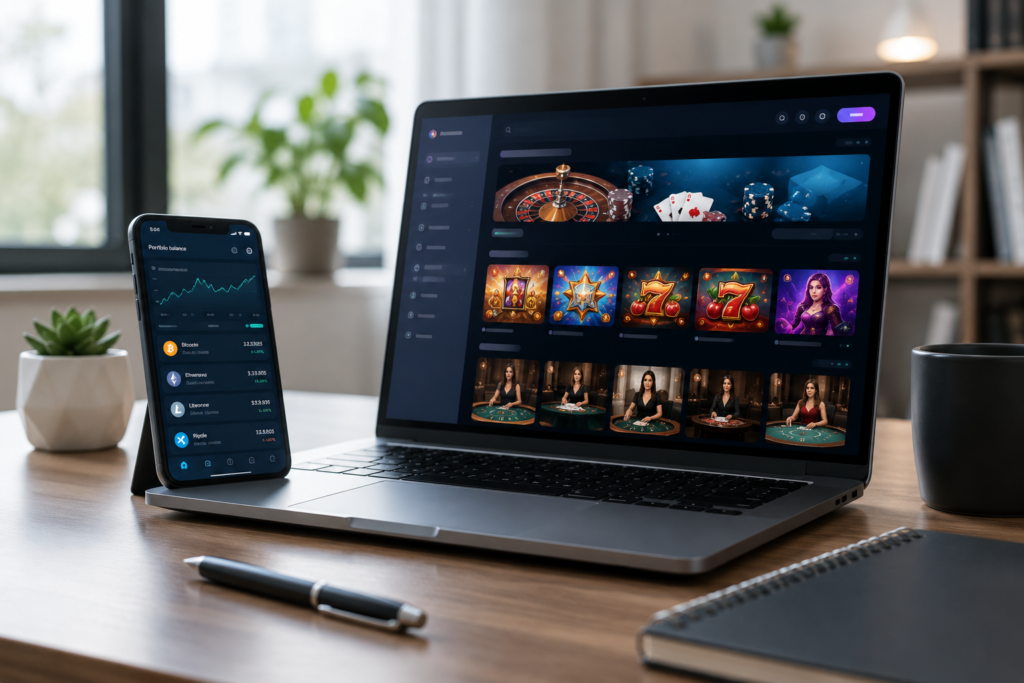
Every spin, bet, and card dealt relies on a complex combination of software and infrastructure.
Although players rarely see it, several technologies work together to ensure games run smoothly, transactions remain secure, and outcomes are fair.
Random Number Generators (RNG)
Most digital casino games rely on a Random Number Generator (RNG).
An RNG is a computer algorithm designed to produce unpredictable outcomes for every game round.
It determines results for games such as:
- Slot machines
- Roulette
- Blackjack (digital versions)
- Video poker
- Instant-win games
Independent testing laboratories regularly evaluate licensed RNG systems to verify that they operate as intended and produce statistically random outcomes.
This process helps build trust between operators and players.
Live Dealer Technology
Some players prefer interacting with real people rather than computer animations.
Live casino technology makes this possible.
Professional dealers host games from purpose-built studios equipped with:
- High-definition cameras
- Professional lighting
- Multiple camera angles
- Real-time streaming
- Interactive chat systems
Players place bets digitally while watching the game unfold live, creating an experience that closely resembles visiting a physical casino.
Gaming Software Providers
Most operators don’t develop every game themselves.
Instead, they partner with specialized software studios that design and maintain game libraries.
These providers create:
- Slot games
- Table games
- Live casino experiences
- Jackpot systems
- Tournament features
This partnership model allows operators to offer a diverse catalogue while developers focus on innovation and gameplay.
Payment Gateways
Payment gateways securely process deposits and withdrawals.
They connect players, banks, digital wallets, and cryptocurrency networks while encrypting sensitive financial information.
Reliable payment infrastructure is essential because it directly affects user trust and overall platform experience.
Cloud Infrastructure
Modern iGaming platforms serve players across multiple countries simultaneously.
Cloud computing helps operators:
- Scale during peak traffic
- Improve website performance
- Reduce downtime
- Protect player data
- Deliver games quickly across different devices
Without cloud technology, supporting millions of concurrent users would be significantly more difficult.
Blockchain and Cryptocurrency in iGaming
One of the most significant developments in recent years has been the integration of blockchain technology.
While traditional online casinos rely heavily on centralized payment systems, blockchain introduces new ways to process transactions and improve transparency.
Some platforms now support cryptocurrency deposits and withdrawals alongside conventional payment methods.
Potential benefits include:
- Faster international transactions
- Lower transfer costs
- Improved payment flexibility
- Greater transparency for blockchain-based transactions
Blockchain has also encouraged the development of provably fair gaming, where players can independently verify certain game outcomes using cryptographic methods.
Although not every platform supports these features, blockchain continues to influence the evolution of online gambling.
How to Choose a Safe iGaming Platform
With thousands of operators available online, selecting the right platform is just as important as choosing the games you want to play.
Before creating an account, consider the following factors:
Licensing
A reputable platform should clearly display information about its regulatory license.
Licensing helps demonstrate that the operator follows established standards related to player protection and responsible gaming.
Security
Look for platforms that use secure website encryption and offer additional account protection, such as two-factor authentication.
Protecting personal and financial information should always be a priority.
Fair Gaming
Reliable operators work with independently tested gaming software and clearly explain how their games function.
If a platform provides little or no information about fairness or testing, it’s worth exercising caution.
Payment Options
A trustworthy platform typically supports multiple deposit and withdrawal methods with transparent processing policies.
Understanding available payment options before registering can help avoid surprises later.
Customer Support
Responsive customer service is another important indicator of platform quality.
Check whether assistance is available through channels such as:
- Live chat
- Help center
- Frequently Asked Questions
Quick access to support can be valuable if account or payment issues arise.
Reputation
Finally, research the operator’s reputation.
Independent reviews, user experiences, and industry recognition can provide useful insights into overall reliability and service quality.
✔️ Safe iGaming Checklist
Before signing up, ask yourself:
- Is the platform licensed?
- Does it use secure encryption?
- Are payment methods clearly explained?
- Are terms and conditions transparent?
- Is customer support easy to reach?
- Does the operator promote responsible gambling?
- Does the platform have a positive reputation?
If you answer yes to most of these questions, you’re more likely to be dealing with a reputable operator.
📌 Key Takeaways
- Behind every iGaming platform is a sophisticated combination of payment systems, security tools, gaming software, cloud infrastructure, and regulatory processes.
- Technologies such as RNG, live dealer streaming, blockchain, and cryptocurrency continue to improve transparency and user experience.
- Choosing a licensed and reputable platform is one of the most important decisions players can make.
- Security, fairness, payment flexibility, and customer support are strong indicators of a trustworthy operator.
Benefits and Risks of iGaming
Like any form of online entertainment involving real money, iGaming offers both opportunities and responsibilities. Understanding the advantages and the potential risks helps players make informed decisions and enjoy the experience more safely.
Rather than viewing iGaming as simply “good” or “bad,” it’s more useful to evaluate how platforms operate, what protections they offer, and how players approach them.
Benefits of iGaming
Convenience and Accessibility
Perhaps the biggest advantage of iGaming is convenience.
Instead of traveling to a physical casino or betting shop, players can access thousands of games from a computer, tablet, or smartphone. Whether you’re at home or on the move, licensed platforms are available around the clock in regions where online gambling is permitted.
A Wider Variety of Games
A traditional casino has physical limitations. Floor space determines how many slot machines or gaming tables it can offer.
Online platforms don’t face the same constraints.
Many operators feature:
- Thousands of slot titles
- Multiple blackjack and roulette variants
- Live dealer tables
- Poker tournaments
- Sports betting markets
- Esports wagering
- Crash and instant-win games
This variety allows players to explore different experiences without changing platforms.
Flexible Payment Methods
Modern iGaming platforms support a broad range of payment options, including:
- Credit and debit cards
- Bank transfers
- E-wallets
- Prepaid vouchers
- Cryptocurrencies (where supported)
The addition of digital assets has made international transactions faster for many users and expanded payment flexibility.
Innovation Through Technology
The iGaming industry has been quick to adopt emerging technologies.
Today’s platforms increasingly use:
- AI-powered recommendations
- Live dealer studios
- Mobile-first design
- Blockchain-based payments
- Advanced fraud detection
- Cloud infrastructure
These innovations contribute to smoother gameplay, stronger security, and more personalized user experiences.
Risks of iGaming
While the industry offers many benefits, players should also understand the challenges associated with online gambling.
Gambling Can Become Harmful
For some individuals, gambling may develop into problematic behavior.
Responsible operators provide tools designed to help users manage their activity, including:
- Deposit limits
- Session reminders
- Time-out periods
- Self-exclusion programs
If gambling stops being enjoyable or begins affecting finances, relationships, or well-being, seeking professional support is important.
Unlicensed Operators
Not every website offering gambling services operates under recognized regulatory oversight.
Unlicensed platforms may present risks such as:
- Unclear terms
- Delayed withdrawals
- Poor customer support
- Limited player protections
Researching an operator before registering can help reduce these risks.
Security Threats
As with any online service, users should remain alert to cybersecurity risks.
Common threats include:
- Phishing emails
- Fake casino websites
- Fraudulent mobile apps
- Stolen login credentials
Using strong passwords, enabling two-factor authentication, and accessing only official websites are simple but effective security practices.
Financial Risk
Every gambling activity involves the possibility of losing money.
Players should:
- Set a budget before playing
- Never chase losses
- Treat gambling as entertainment rather than a guaranteed way to make money
Maintaining realistic expectations helps support a healthier gaming experience.
📷 Inline Image 4 (Place Here)
Natural Editorial Image Prompt
A stylish modern gaming lounge with a player enjoying a live dealer game on a large curved monitor. Warm ambient lighting, comfortable seating, elegant interior design, realistic editorial photography style, no visible branding or text.
The Future of iGaming
The online gambling industry continues to evolve alongside advances in digital technology. While no one can predict exactly what the future will look like, several trends are already shaping the next generation of iGaming.
Artificial Intelligence
AI is expected to play an even greater role in areas such as:
- Personalized game recommendations
- Customer support
- Fraud detection
- Responsible gambling monitoring
- Operational efficiency
Rather than replacing human interaction, AI is likely to enhance many aspects of the player experience.
Blockchain and Cryptocurrency
Blockchain technology is gradually becoming part of mainstream iGaming.
Potential applications include:
- Faster payments
- Transparent transaction records
- Provably fair gaming
- Digital asset rewards
- Cross-border transactions
As regulatory frameworks continue to develop, blockchain could become an increasingly important component of online gambling infrastructure.
Web3 Gaming
Web3 introduces new concepts built around digital ownership and decentralized technologies.
Although still developing, potential use cases include:
- Blockchain-based player identities
- Tokenized loyalty programs
- Community governance
- Digital collectibles
- Interoperable gaming assets
These ideas may reshape how players interact with online gaming platforms over the coming years.
Virtual Reality and Immersive Experiences
Virtual reality (VR) has the potential to bring players even closer to the atmosphere of a physical casino.
Future platforms may offer:
- Interactive casino environments
- Virtual poker tournaments
- Social gaming spaces
- Real-time multiplayer experiences
While widespread adoption is still developing, VR remains an area of active innovation.
Frequently Asked Questions
What does iGaming mean?
iGaming refers to all forms of gambling conducted over the internet, including online casinos, sports betting, poker, bingo, lotteries, and related digital gaming services.
Is iGaming the same as online gambling?
Yes. The term “iGaming” is widely used within the industry to describe online gambling and betting services.
Is iGaming legal?
Legality depends on the country or region. Some jurisdictions regulate online gambling, while others restrict or prohibit certain activities. Players should always check their local laws before participating.
Can I use cryptocurrency on iGaming platforms?
Many operators now support cryptocurrencies such as Bitcoin, Ethereum, and stablecoins. Availability varies depending on the platform and local regulations.
What is a live dealer casino?
A live dealer casino streams real dealers from professional studios, allowing players to participate in table games in real time through the internet.
What is RNG?
A Random Number Generator (RNG) is a certified algorithm used to produce random outcomes in many digital casino games.
How do I know if an iGaming platform is safe?
Look for:
- Valid licensing
- Secure encryption
- Transparent payment policies
- Independent game testing
- Responsive customer support
Can I play on my mobile phone?
Yes. Most modern iGaming platforms are optimized for smartphones and tablets.
What is responsible gambling?
Responsible gambling means treating gambling as entertainment, setting spending limits, managing your time, and knowing when to stop.
How is blockchain changing iGaming?
Blockchain supports faster payments, greater transparency, and innovations such as provably fair gaming and crypto-based transactions.
Conclusion
The iGaming industry has transformed the way people access casino games, sports betting, poker, and other forms of online entertainment. What began as a simple extension of traditional gambling has evolved into a sophisticated digital ecosystem powered by cloud computing, artificial intelligence, live streaming, and, increasingly, blockchain technology.
For players, iGaming offers convenience, variety, and flexibility that physical venues often cannot match. At the same time, choosing licensed platforms, understanding responsible gambling practices, and protecting personal information remain essential for a safe experience.
As technologies such as AI, Web3, and cryptocurrency continue to mature, the industry is likely to become even more interactive and personalized. While the future will bring new opportunities, the fundamentals remain the same: informed decisions, realistic expectations, and responsible participation are the keys to enjoying online gaming.
Whether you’re exploring iGaming out of curiosity, researching the industry, or considering trying a licensed platform, understanding how it works provides the best foundation for making confident and informed choices.