


The latest crypto clarity act news has added another twist to the ongoing effort to establish a comprehensive regulatory framework for digital assets in the United States. After months of negotiations and growing optimism across the cryptocurrency industry, the U.S. Senate has postponed consideration of the Digital Asset Market Clarity Act, choosing instead to prioritize other legislative matters before the congressional recess.
While the delay does not signal the end of the legislation, it creates fresh uncertainty for crypto businesses, investors, and policymakers who have been waiting for clearer rules governing digital assets.
Why Was the Bill Delayed?
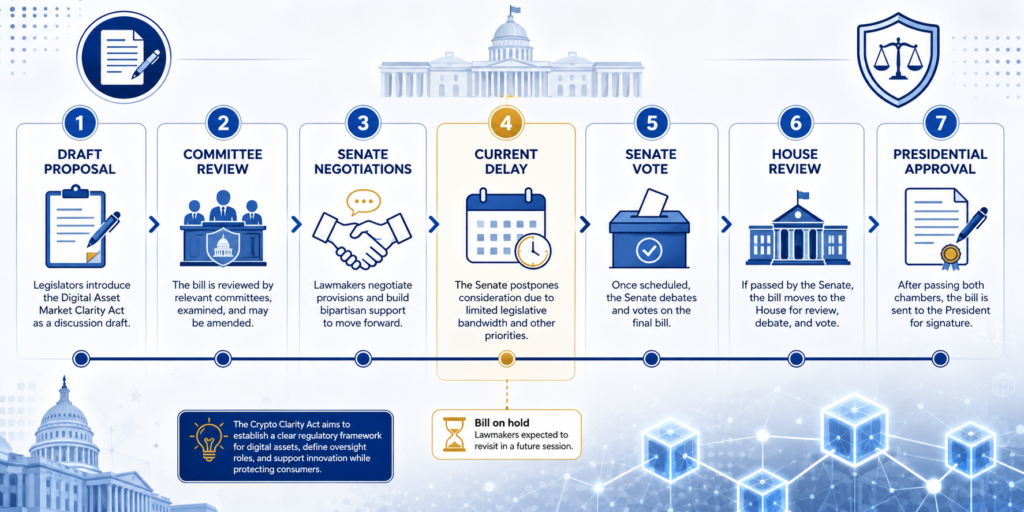
According to reports, Senate leadership has shifted its attention to other legislative priorities, including unrelated bills competing for limited floor time. As a result, lawmakers were unable to schedule debate and voting on the crypto market structure legislation before the Senate’s packed calendar.
Industry observers note that the postponement is largely procedural rather than ideological. The legislation continues to receive support from many lawmakers and industry participants, but timing has become a major obstacle.
Why the Clarity Act Matters
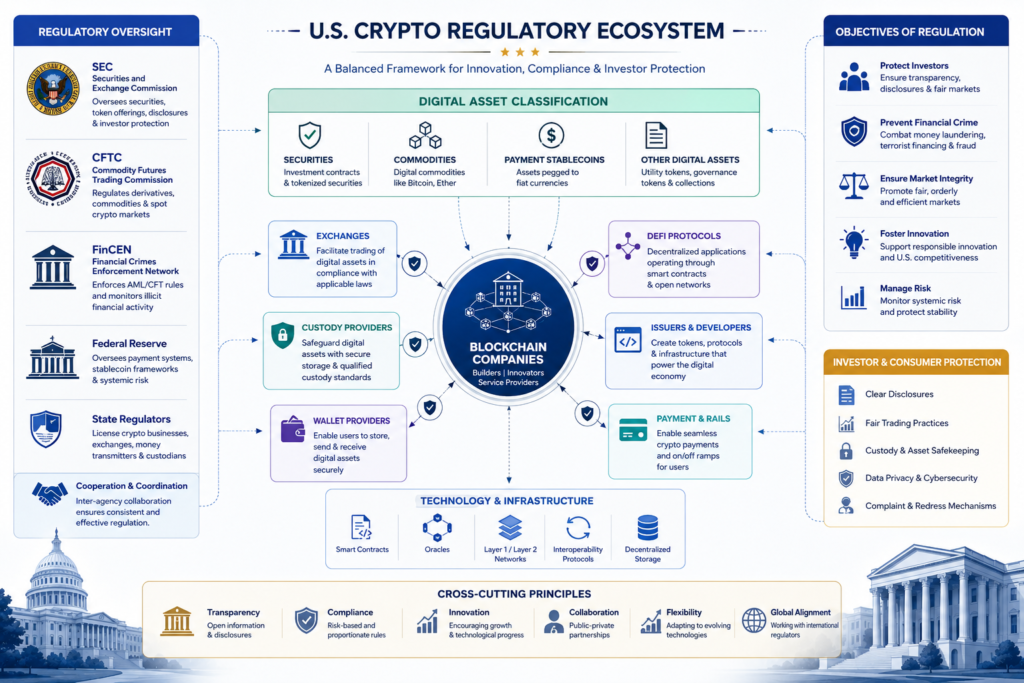
The Digital Asset Market Clarity Act is designed to establish clearer regulatory responsibilities for digital assets in the United States. One of its primary objectives is reducing uncertainty around how cryptocurrencies should be classified and which federal agencies oversee different parts of the market.
If eventually enacted, the legislation could help:
- Provide greater regulatory certainty for crypto companies.
- Clarify oversight between federal regulators.
- Support blockchain innovation while improving investor protections.
- Encourage institutional participation through clearer compliance standards.
Many industry participants believe consistent regulation is essential for long-term growth and broader adoption of blockchain technology.
Impact on the Crypto Industry
Although the Senate delay does not immediately change existing regulations, it extends uncertainty for exchanges, blockchain developers, token issuers, and institutional investors.
Companies operating in the United States have repeatedly argued that inconsistent regulatory interpretations make product launches, compliance planning, and investment decisions more difficult. Delayed legislation means many businesses must continue operating within an evolving regulatory environment.
Institutional investors are also closely monitoring developments because regulatory clarity often influences capital allocation, custody services, and broader digital asset adoption.
What Happens Next?
Despite the postponement, the legislation remains active. Lawmakers can return to the proposal once Senate scheduling allows, although the narrowing legislative calendar may make passage more challenging before the next recess. Reports indicate that revised draft language and ongoing negotiations continue behind the scenes, suggesting discussions are far from over.
Future debate may also include revisions addressing ethics provisions, regulatory jurisdiction, and other areas that have generated bipartisan discussion.
Why Investors Are Paying Attention
Regulatory developments frequently influence market confidence even when they do not immediately affect token prices.
Clear legislation can:
- Reduce legal uncertainty.
- Encourage institutional investment.
- Improve business planning for crypto companies.
- Strengthen consumer confidence.
- Support long-term blockchain innovation.
Conversely, prolonged delays may cause companies to postpone expansion plans or continue seeking regulatory certainty in other jurisdictions.
Final Thoughts
The latest crypto clarity act news highlights that regulatory reform remains a work in progress. Although the Senate has postponed consideration of the legislation due to competing priorities rather than outright opposition, the delay extends uncertainty for an industry eager for clearer rules.
Whether the bill advances later this year or requires additional revisions, it is likely to remain one of the most closely watched pieces of U.S. cryptocurrency legislation. For investors, developers, and businesses alike, its eventual outcome could play an important role in shaping the next chapter of the American digital asset ecosystem.