



The pig butchering scam has emerged as one of the fastest-growing forms of crypto fraud, costing victims billions of dollars worldwide. Unlike traditional phishing attacks, these scams rely on long-term social engineering, where criminals spend weeks or even months building trust before convincing victims to invest in fake cryptocurrency platforms.
As cryptocurrency adoption continues to grow, fraudsters are becoming increasingly sophisticated. They combine fake investment opportunities, romance scams, and social media manipulation to create convincing stories that lure victims into transferring digital assets. Understanding how these scams operate is one of the most effective ways to avoid becoming a victim.
Key Highlights
- Pig butchering scams rely on long-term emotional manipulation rather than instant deception.
- Fraudsters often contact victims through dating apps, social media, WhatsApp, or Telegram.
- Victims are shown fake profits to encourage larger cryptocurrency deposits.
- Most scam platforms are designed solely to steal funds and prevent withdrawals.
- Awareness and verification remain the strongest defenses against crypto investment fraud.
What Is a Pig Butchering Scam?
A pig butchering scam is a type of investment fraud where scammers gradually build a relationship with a target before persuading them to invest in fraudulent cryptocurrency or forex trading platforms. The term originates from the idea of “fattening up” a victim with trust and fake profits before stealing as much money as possible.
Unlike quick phishing attacks, these scams are carefully planned. Criminals often pretend to be successful investors, entrepreneurs, or professionals and spend considerable time communicating with victims to establish credibility.
Because cryptocurrency transactions are generally irreversible, scammers prefer requesting payments in Bitcoin, Ethereum, USDT, or other digital assets.
How Does a Pig Butchering Scam Work?
Most pig butchering scams follow a predictable pattern.
1. Initial Contact
The scam usually begins with an unexpected message through:
- Telegram
- Dating applications
The scammer claims they contacted the victim by mistake or starts a friendly conversation.
2. Building Trust
Over days or weeks, the conversation becomes more personal. Scammers often discuss their lifestyle, career, or successful investments to gain the victim’s confidence.
3. Investment Opportunity
Once trust is established, they introduce what appears to be a profitable cryptocurrency trading platform or investment app.
Initially, victims invest relatively small amounts.
4. Fake Profits
The platform displays impressive gains, encouraging victims to believe their investment strategy is working.
Some scammers even allow small withdrawals to reinforce credibility.
5. Larger Deposits
After seeing apparent profits, victims are persuaded to invest significantly larger amounts.
This stage often involves pressure tactics such as limited-time opportunities or exclusive investment strategies.
6. Exit Scam
When victims attempt to withdraw their funds, they are told to pay additional taxes, verification fees, or security deposits. Eventually, communication stops, and both the scammer and fake platform disappear.
Why Cryptocurrency Is Frequently Used
Cryptocurrency has become a preferred payment method for scammers because it offers characteristics that criminals can exploit.
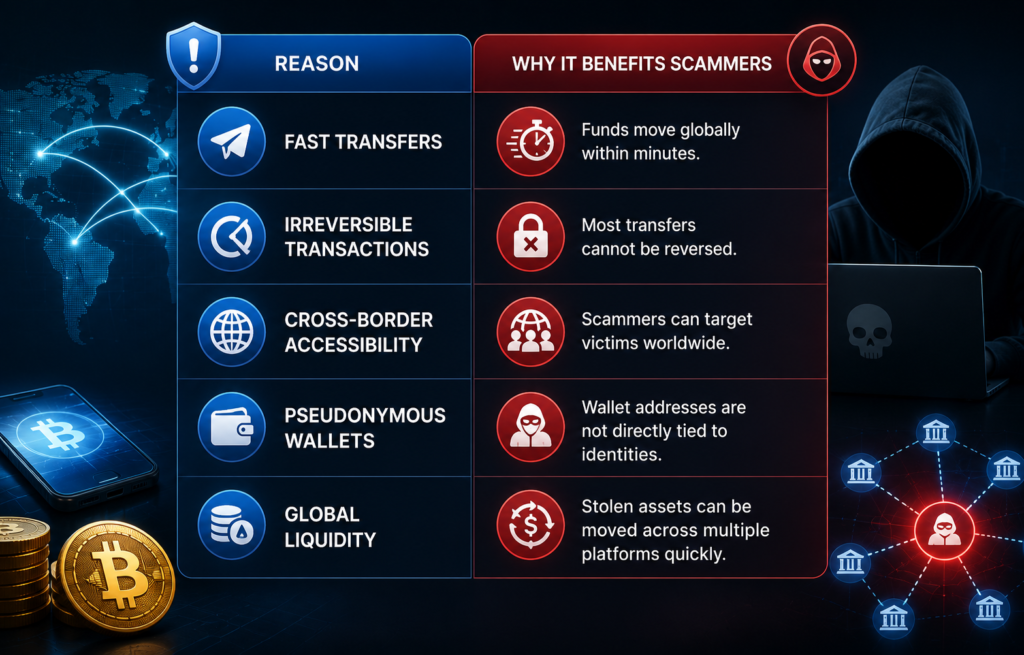
These features make crypto an attractive medium for legitimate innovation but also create opportunities for financial criminals.
Common Warning Signs
Recognizing the warning signs early can prevent substantial financial losses.
Watch out for these red flags:
- Unexpected messages from strangers.
- Someone quickly expressing friendship or romantic interest.
- Guaranteed investment returns with little or no risk.
- Pressure to invest immediately.
- Requests to transfer cryptocurrency instead of traditional payment methods.
- Fake trading dashboards showing unusually high profits.
- Withdrawal restrictions or unexpected fees.
- Claims that an opportunity is “exclusive” or “limited.”
If an investment sounds too good to be true, it probably is.
Who Is Most at Risk?
Although anyone can become a victim, scammers frequently target:
- First-time crypto investors
- Online dating users
- Retirees
- Professionals with disposable income
- Social media users
- Members of cryptocurrency communities
Scammers customize their approach based on each victim’s interests and financial situation, making these fraud schemes highly personalized.
How to Protect Yourself
Protecting yourself starts with verifying every investment opportunity.
Consider the following best practices:
- Research any platform before depositing funds.
- Verify company registrations and official websites.
- Never trust investment advice from strangers online.
- Test withdrawals before making larger deposits.
- Enable two-factor authentication (2FA) on crypto accounts.
- Store long-term holdings in reputable hardware wallets.
- Ignore promises of guaranteed profits.
Independent research is far more valuable than relying on advice from unknown online contacts.
What Should You Do If You’ve Been Scammed?
If you believe you’ve become a victim of a pig butchering scam:
- Stop sending additional funds immediately.
- Preserve screenshots, wallet addresses, and communication records.
- Report the incident to your local law enforcement agency.
- Notify the cryptocurrency exchange involved, if applicable.
- Monitor your wallets for unauthorized activity.
- Warn friends and family to prevent further victims.
Be cautious of so-called “crypto recovery services” that promise guaranteed fund recovery, as many of these are scams themselves.
Why This Scam Continues to Grow
Pig butchering scams continue to evolve because criminals combine psychology with technology. Artificial intelligence, fake identities, fraudulent investment platforms, and encrypted messaging applications have made these operations more convincing than ever.
International law enforcement agencies and blockchain analytics firms are increasingly collaborating to disrupt these criminal networks. However, public awareness remains one of the most effective tools for reducing victim losses.
Conclusion
The pig butchering scam is more than just another cryptocurrency fraud. It is a carefully orchestrated social engineering attack designed to exploit trust, emotions, and financial ambition.
While blockchain technology continues to transform finance, investors should remember that legitimate investment opportunities never require secrecy, guaranteed profits, or pressure to act immediately.
By understanding how these scams work, verifying every investment platform, and remaining skeptical of unsolicited financial advice, individuals can significantly reduce their risk of becoming victims.
Frequently Asked Questions
What is a pig butchering scam?
A pig butchering scam is a long-term investment fraud where scammers build trust with victims before convincing them to invest in fake cryptocurrency or financial platforms. The goal is to steal increasingly larger amounts of money.
Why is it called a pig butchering scam?
The name refers to the scammer’s strategy of gradually “fattening up” victims with trust and fake profits before stealing their funds in one final fraudulent transaction.
How do pig butchering scams work?
Scammers initiate contact through messaging apps or social media, build relationships over time, promote fake investment platforms, display false profits, encourage larger deposits, and eventually disappear once victims attempt withdrawals.
Can money be recovered from a pig butchering scam?
Recovery depends on the circumstances and how quickly the fraud is reported. Victims should notify law enforcement and relevant cryptocurrency exchanges immediately, but they should be cautious of fraudulent recovery services.
How can you avoid crypto investment scams?
Research investment platforms independently, verify company credentials, avoid guaranteed returns, never send cryptocurrency to strangers, and remain skeptical of unsolicited investment opportunities.