


Key Highlights
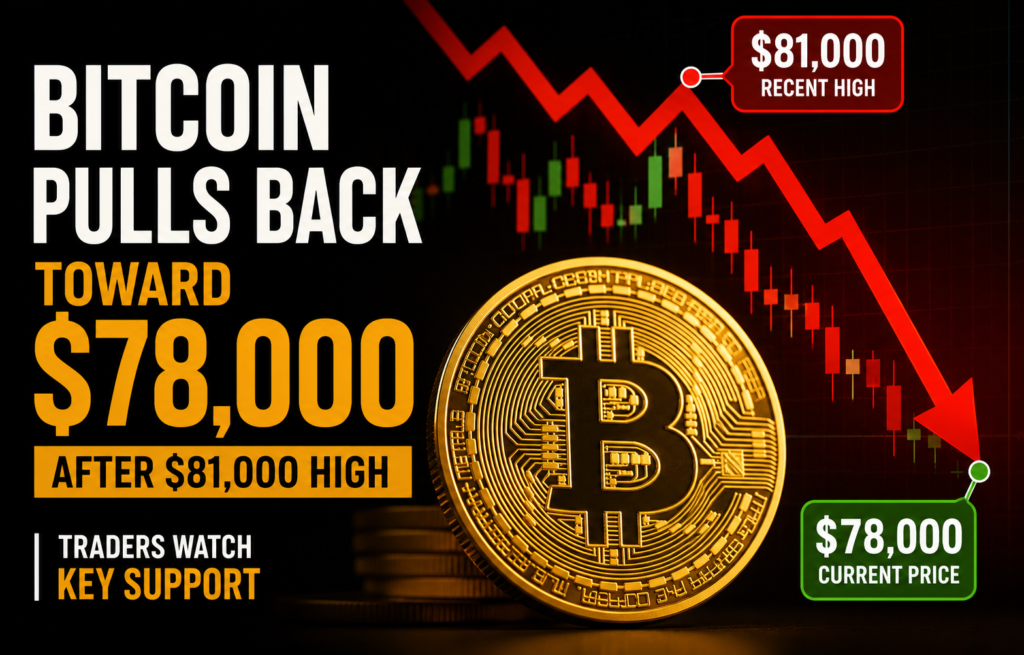
- Bitcoin pulled back to around $77,800 after briefly reaching an August peak of $81,354.
- U.S. spot Bitcoin ETFs logged $924 million in net weekly inflows, reflecting resilient institutional demand.
- Traders view $78,000 as crucial short-term support required to stage another retest of the $80,000 level.
- Macro factors like U.S. Treasury bond buybacks and a softer dollar continue to provide an underlying tailwind.
Bitcoin is trading near $78,000 on August 31 after losing momentum from last week’s move toward the $81,000 region. BTC briefly climbed as high as $81,354 on August 28, according to Bitfinex historical data, before ending the session lower and entering a period of consolidation.
The latest pullback puts Bitcoin at an important point in its recent recovery. After a strong advance through August, buyers are now facing the challenge of defending lower support while traders assess whether the market can regain the $80,000 level.
At the time of writing, Bitcoin is changing hands around $77,800, with the cryptocurrency remaining well above the levels seen earlier in August.
Bitcoin’s Rally Loses Momentum Near $81,000
Bitcoin’s move toward $81,000 represented a major extension of the August recovery.
On August 21, Bitcoin opened around $73,026 and climbed to nearly $79,538 during the session. The following week saw Bitcoin continue testing higher levels before reaching an August high above $81,000.
The latest price action shows that the market has struggled to maintain momentum above $80,000.
That does not necessarily mean the broader recovery has ended. Instead, Bitcoin is entering a phase where traders need to determine whether the recent decline represents normal profit-taking or the beginning of a deeper correction.
$78,000 Becomes an Important Short-Term Level
With Bitcoin now trading close to $78,000, the area has become an important short-term reference point.
The cryptocurrency’s recent price history shows that BTC has repeatedly moved through the upper-$70,000 range. A successful defense of this area could give buyers another opportunity to challenge $80,000 and eventually retest the recent $81,000-plus high.
A sustained move back above $80,000 would improve the short-term structure and could encourage traders to focus on the recent high.
However, a deeper decline could change the picture.
If Bitcoin loses the current support zone and selling volume increases, traders could begin watching the mid-$70,000 region for the next major area of demand.
ETF Flows Add Another Layer of Uncertainty
Bitcoin’s price is also being influenced by changing institutional flows.
U.S. spot Bitcoin ETFs recorded approximately $924 million in net inflows between August 24 and August 28, according to data cited in recent market reporting. BlackRock’s IBIT accounted for the majority of those weekly inflows. Despite that demand, Bitcoin still struggled to maintain levels above $80,000.
The divergence is important.
Strong ETF demand alongside a consolidating Bitcoin price could suggest that buyers are absorbing some of the selling pressure. At the same time, it shows that institutional inflows alone have not been enough to push BTC decisively beyond the recent resistance zone.
Traders will therefore be watching whether ETF flows remain positive as September begins.
Macro Conditions Remain Important
Bitcoin’s August rally has also developed against a changing macroeconomic backdrop.
A weaker U.S. dollar and renewed concerns about currency debasement have helped support demand for alternative assets. The U.S. Treasury’s decision to increase long-dated bond buybacks has also influenced expectations around liquidity and bond-market stability.
These factors have helped create a more supportive environment for Bitcoin.
However, macro conditions can change quickly. A stronger dollar, rising Treasury yields or a shift toward tighter financial conditions could place additional pressure on risk assets.
That makes the next phase of Bitcoin’s price action dependent on both crypto-specific demand and broader financial markets.
Bitcoin’s Next Move Could Depend on $80,000
The $80,000 level remains the clearest psychological barrier for Bitcoin.
A recovery above that level would put the recent $81,354 high back into focus. If buyers manage to break and hold above the August high, the market could begin looking toward higher resistance levels.
The opposite scenario would involve Bitcoin continuing to trade below $80,000 and gradually losing support.
In that case, the recent rally could enter a longer consolidation phase as traders wait for another catalyst.
The difference between a healthy pullback and a broader reversal will likely become clearer through volume, derivatives positioning and spot demand.
What Traders Should Watch Next
There are several indicators that could help determine Bitcoin’s next direction.
- First, the $78,000 area: Holding this zone would keep the recent recovery structure relatively stable.
- Second, $80,000: Reclaiming this psychological level would give buyers a stronger short-term signal.
- Third, the $81,354 high: A decisive move above the recent peak would confirm that buyers have regained control of the immediate trend.
- Fourth, ETF flows: Continued institutional demand could provide an important source of support if retail activity remains cautious.
- Finally, trading volume: A breakout supported by stronger spot volume would generally carry more weight than a move driven primarily by thin liquidity or leveraged positioning.
Bitcoin Enters a Key Consolidation Phase
Bitcoin’s move from around $73,000 to above $81,000 earlier this month demonstrated that buyers remain active. The subsequent decline toward $77,800 shows that sellers are still defending the upper-$70,000 to low-$80,000 range.
The immediate story is therefore not simply that Bitcoin is falling.
It is that Bitcoin has pulled back after testing a major resistance area, creating a new test for buyers.
If BTC can stabilize around current levels and reclaim $80,000, the recent high could quickly become the next target. If support breaks instead, traders may need to prepare for a deeper retracement.
For now, the market has shifted from chasing the rally to watching whether Bitcoin can build a stable base for its next move.