


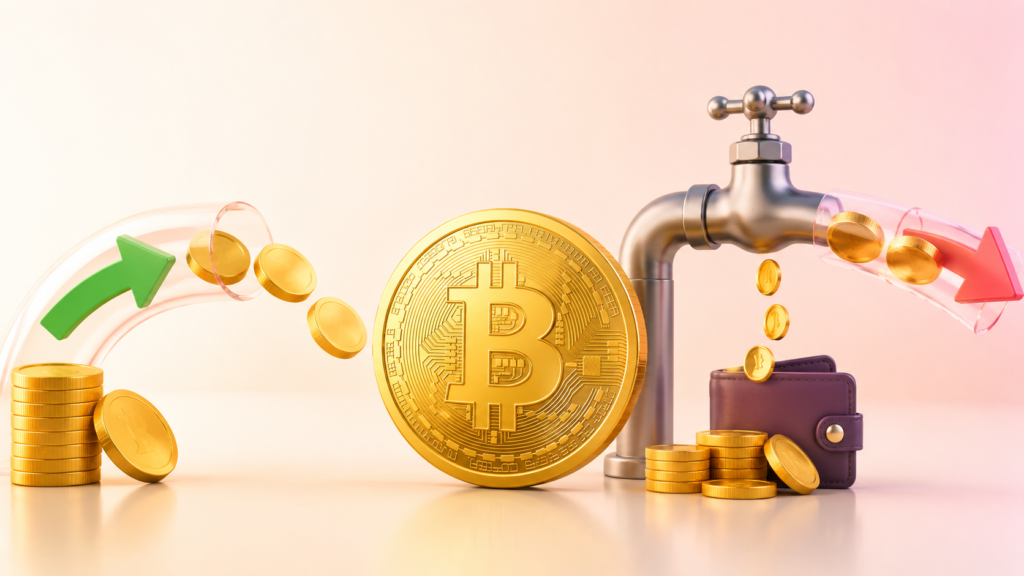
There is a transaction happening right now, somewhere on the Ethereum or BNB Chain network, where a trader buys a token for $500 and receives the equivalent of $460 worth of tokens into their wallet. The remaining $40 disappeared instantly deducted by a function buried in the token’s smart contract, sent to an address the buyer never saw and almost certainly never checked.
That deduction has a name in the memecoin world: the transaction tax. And understanding exactly how it works, why it exists, how it gets abused, and what the on-chain signatures of extraction look like is one of the more practically useful pieces of knowledge available to anyone navigating crypto markets in 2026.
This article is not about taxation in the legal or government sense. It is about a technical mechanism built into token smart contracts and the spectrum from legitimate to predatory that mechanism spans.
What a Token Tax Actually Is
In standard ERC-20 token design, a transfer of tokens is a simple instruction: move X tokens from address A to address B. The amount sent equals the amount received. No intermediary, no deduction, no fee.
A tax token modifies that core behavior. Inside the _transfer() function the foundational code that executes every token movement a conditional logic block intercepts the transfer, calculates a percentage fee, and routes that fee to one or more designated addresses before the remaining amount reaches the recipient.
The fee calculation sits inside the smart contract itself. It is not a separate agreement, not a disclosed line item in a swap interface, and not something the blockchain prompts you to approve. When you click “swap” on Uniswap or Raydium, the DEX router executes the token’s own transfer function, which quietly applies whatever tax rate is coded in.
In practical terms: if a token has a 10% buy tax and you send 1 ETH to the liquidity pool, you receive tokens worth 0.9 ETH in value. The 0.1 ETH worth of tokens went somewhere else automatically, silently, and irreversibly.
The Technical Architecture: How It Works Inside the Contract
The fee mechanism typically operates through three components working together.
The fee rate variable: Most tax tokens store buy and sell rates as separate state variables _buyFee, _sellFee, or similar names. These are integers representing basis points or percentage figures. A contract storing _sellFee = 1000 typically means a 10% sell tax (1000 basis points out of 10,000 total).
The address whitelist: Tax contracts include a mapping of addresses excluded from fees. The deployer’s wallet, the contract itself, and sometimes specific “marketing” addresses receive tokens at zero tax. This is how early buyers connected to the team enter before retail with no cost penalty.
The fee destination: The extracted tokens are routed to one or more configured addresses. Standard configurations route to a “marketing wallet,” a “development wallet,” a “treasury,” or back to the liquidity pool as automatic liquidity. In the redistribution model popularized by “reflection” tokens a portion of every transaction is distributed proportionally to all current holders.
Here is what the core logic looks like in Solidity pseudocode, stripped to its essential structure:
function _transfer(address from, address to, uint256 amount) private {
    uint256 fee = (amount * _taxFee) / 100;
    uint256 transferAmount = amount - fee;

    _balances[marketingWallet] += fee;
    _balances[to] += transferAmount;
    _balances[from] -= amount;
}
Three lines of accounting change a standard transfer into an extraction event. The sophistication of real implementations is higher, but this captures the fundamental mechanism.
The Spectrum: From Legitimate to Predatory
Token taxes exist on a wide spectrum. The mechanism itself is not inherently malicious what determines whether a tax structure serves a project’s users or extracts from them is who controls the fee rate, where the fee goes, and whether the rate is fixed or adjustable.
Legitimate Use Cases
Protocol-Funded Development: Some projects use a fixed, low transaction fee typically 1–3% to fund ongoing development without requiring venture capital or token sales. If the fee rate is hardcoded at deployment and the owner address is renounced, the tax becomes a transparent, immutable operating expense for the protocol. Users know the cost before they enter. The fee is not adjustable. No one can raise it later.
Automatic Liquidity Generation: A class of DeFi protocols routes a portion of every transaction tax back into the DEX liquidity pool automatically. The mechanism accumulates small fee fractions, swaps them into ETH or BNB, and pairs them with tokens to add liquidity. When functioning as described and with a renounced contract, this can genuinely deepen liquidity over time. The theoretical benefit is real. Whether it works in practice depends on whether the project survives long enough for the liquidity accumulation to matter.
Reflection Tokens: The reflection model redistributes a percentage of every transaction proportionally among all current holders. Hold 1% of the supply and you receive 1% of every reflection event. This was marketed heavily during the 2021 BSC token boom as passive income for holders. The mechanics work mathematically. The economic problem is that reflection tokens require high transaction volume to generate meaningful holder rewards, which creates pressure to chase marketing-driven volume rather than genuine utility.
The Extraction Pattern
The legitimate use cases above all share one characteristic: the fee rate is known, fixed, and cannot be changed unilaterally by the deployer.
Most tax tokens in the memecoin ecosystem do not share that characteristic. The overwhelming majority of tax token contracts include an updateFee function, a setTaxFee function, or an equivalent that allows the contract owner to change the tax rate after deployment. Sometimes there are limits coded into this function (a maximum of, say, 25%). Often there are none.
This is the extraction architecture. A token launches with a 5% buy and 5% sell tax low enough to seem reasonable. The deployer generates hype, drives volume, and lets retail buyers accumulate positions. At a predetermined point often when the price has risen significantly and the token has attracted broader attention the owner address calls the tax update function, raising the sell tax to 99%. Every sell order now returns 1 cent per dollar invested. The token effectively becomes a honeypot by modification rather than by original design.
The variant where the tax starts at zero buy / high sell is equally common and sometimes more insidious. The zero buy tax attracts sniper bots and retail buyers who see a “no buy tax” token as unusually favorable. The sell tax high from the beginning but often not visible without a contract audit means almost no one can exit profitably.
The Reflection Token Collapse: A Case Study in Tokenomics Theater
The reflection model peaked in 2021 and produced hundreds of tokens across BSC, Ethereum, and Avalanche, most of which no longer exist. The pattern of failure was consistent enough to document as a template.
Phase 1: Launch and narrative: A token launches with a 10% transaction tax, split between marketing (4%), liquidity (3%), and reflection (3%). Holders are told they earn passive income simply by holding. This framing attracts buyers who intend to hold rather than trade.
Phase 2: Volume-driven rewards: Early holders receive meaningful reflection income because trading volume is high and the total holder count is small. Each transaction generates a visible reward. This positive experience is shared socially, attracting more buyers.
Phase 3: Volume decay: As the initial hype fades, trading volume drops. Reflection income falls. Holders begin checking exit options and find that a 10% sell tax makes profitable exit difficult unless the price has increased significantly.
Phase 4: Liquidity concentration: The liquidity accumulation mechanism has been adding small amounts to the DEX pool, but the pool remains thin relative to the total market cap. Large holders attempting to exit face significant slippage on top of the 10% sell tax, compounding their actual exit cost.
Phase 5: Abandonment: The development team stops communicating. The marketing wallet, funded by 4% of every transaction over the token’s lifetime, has accumulated significant value and is withdrawn. The contract was never renounced, so the owner can execute a final tax-flip or simply walk away.
The reflection token died not because the mathematics were fraudulent they were internally consistent but because the tokenomics model requires perpetual volume growth to sustain holder rewards, and perpetual volume growth requires perpetual new buyers, which is structurally unsustainable.
How Tax Tokens Get Hidden From Buyers
The opacity of token taxes is not accidental. Several techniques are commonly used to obscure fee structures from buyers conducting basic due diligence.
Variable naming obfuscation: Instead of naming the tax variable _sellFee, a contract might store it as _redistributionRate, _reflectionMultiplier, or a combination of variables that must be summed to calculate the real tax rate. Without reading and understanding the full _transfer() function, the effective rate is invisible.
Whitelisted pre-sale wallets: Connected wallets are added to the fee exclusion mapping before launch, allowing team members and pre-sale participants to buy with no tax. These wallets accumulate tokens at zero cost while every public buyer pays the full rate.
Conditional tax activation: Some contracts code the tax as zero at launch and activate it after a certain block number, transaction count, or holder threshold is reached. The token shows as having zero tax in automated security scanners at launch, which pass checks. The tax activates after retail has entered.
Proxy contract upgradability: A proxy architecture allows the contract logic to be replaced entirely after deployment. The original contract, which passes security audits and shows reasonable tax rates, can be swapped for a new implementation with any fee structure the deployer chooses. The token contract address stays the same. Only the underlying logic changes.
Identifying Tax Mechanisms Before You Enter
The practical defense against tax token extraction is contract inspection before entry, not chart analysis after the fact.
The Read Contract check: On Etherscan, open the token contract address, navigate to the Contract tab, then Read Contract. Look for variables that might contain fee or tax rates: _taxFee, _sellFee, buyFee, totalFee, redistributionFee. Each one should be checked. The values are returned in basis points in many contracts a value of 1000 means 10%. Sum all fee-related variables to calculate total effective tax.
The updateFee function check: Still in the Read Contract section, look for functions that accept new fee values as inputs. The presence of setTaxFee, updateFees, or setBuyAndSellTax means the owner can change the rate. The absence of such functions, combined with a renounced owner address, means the tax is fixed permanently at whatever rate you found in step one.
The owner() check: Call the owner() function in Read Contract. If it returns the zero address (0x0000000000000000000000000000000000000000), the contract is renounced and fee update functions if they exist are permanently inaccessible. If any other address is returned, the owner retains the ability to call privileged functions.
The proxy check: Look at the contract header on Etherscan. If it shows “This contract is a proxy,” the logic can be upgraded. Navigate to the Implementation address and audit that code, not the proxy.
Automated tools including GMGN.ai, DEXScreener’s security flags, and Token Sniffer run these checks programmatically and return a summary score. They are faster than manual inspection but should not replace it for positions of meaningful size automated scanners have been bypassed by contracts designed specifically to pass their heuristics.
The Fee Threshold That Changes Everything
The question that matters practically is: what effective total tax rate changes a token from tolerable to inadvisable?
An asymmetric tax where the buy fee is materially lower than the sell fee is the most direct signal of extraction intent. A legitimate project with operational funding needs has no reason to charge buyers 2% and sellers 15%. That asymmetry only makes logical sense if the design goal is to trap capital inside the token.
Total effective tax above 10% buy and sell combined introduces meaningful friction for any trading strategy other than very high-conviction, long-hold positions. At 15%, the breakeven for a round-trip trade (buy and sell at the same price) is 15%, meaning the token must appreciate at least 15% before a trade breaks even excluding slippage and gas.
Above 20% total, the token is structurally oriented toward extraction. The economics favor the deployer’s fee collection over trader returns in almost every scenario except parabolic appreciation.
At 99% sell tax, it is not a token. It is a one-way door.
The Underlying Knowledge Point
Token taxes exist because the smart contract standard that defines how ERC-20 tokens work and the equivalent on other chains does not prohibit modifications to the transfer function. The token standard specifies an interface, not an implementation. What happens inside _transfer() is at the discretion of whoever wrote the contract.
That discretion is what creates both legitimate and predatory outcomes from the same technical mechanism. A fixed, low, renounced-contract tax funding genuine protocol development is a reasonable design choice. An adjustable, owner-controlled tax with no cap, applied to a token with no utility other than trading, is a fee extraction system that happens to be denominated in a token.
The difference between those two outcomes is not visible in the price chart. It is visible in the contract code, the owner address, and the fee update function three things that take two minutes to check and are looked at by almost no one before capital is committed.