



A federal judge has temporarily halted Minnesota’s attempt to ban prediction markets, giving Kalshi and Polymarket an important legal victory while a broader court battle continues. The decision marks another significant moment in the growing debate over whether prediction markets should be regulated under federal financial laws or state gambling rules.
The latest development surrounding Kalshi Minnesota prediction markets highlights the increasing legal uncertainty facing event-based trading platforms as more states examine their regulatory authority over these rapidly growing markets.
Federal Court Pauses Minnesota’s Enforcement
Minnesota regulators had planned to prohibit residents from accessing certain prediction market platforms, arguing that contracts tied to future events resembled unauthorized gambling activities.
However, a federal judge temporarily blocked the state’s enforcement efforts after concluding that Kalshi had presented substantial legal arguments that federal law may preempt state restrictions on federally regulated event contracts.
While the ruling does not permanently settle the dispute, it allows Kalshi to continue operating in Minnesota during the litigation process. The decision could also influence similar legal battles emerging in other U.S. jurisdictions.
Why the Case Matters Beyond Minnesota
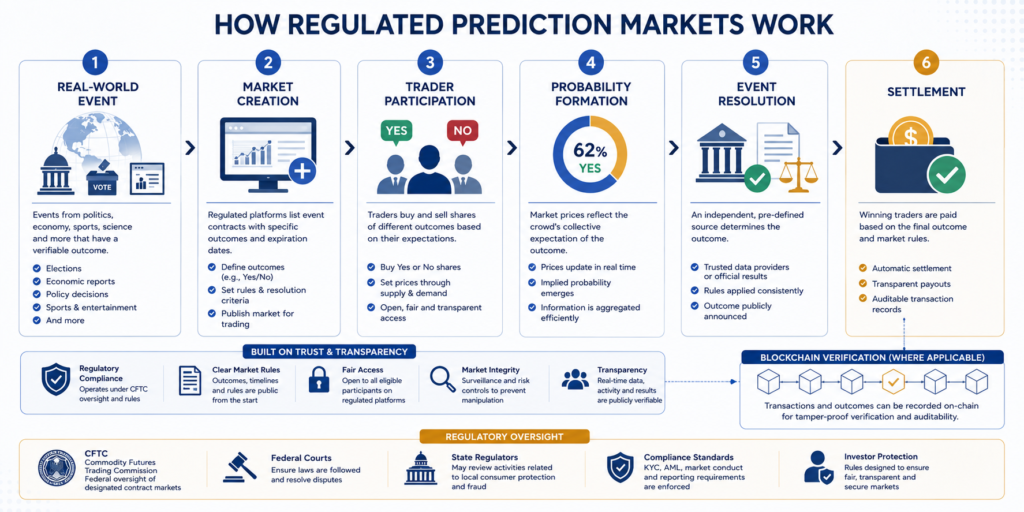
Prediction markets have evolved into sophisticated financial platforms where participants trade contracts based on the outcome of real-world events.
These markets cover a wide range of topics, including:
- Elections
- Economic indicators
- Sports events
- Entertainment awards
- Cryptocurrency developments
- Regulatory decisions
Supporters argue these platforms improve information discovery by aggregating market expectations, while critics believe they closely resemble sports betting or gambling.
The current dispute reflects a broader question about which regulators should oversee these products as the industry expands.
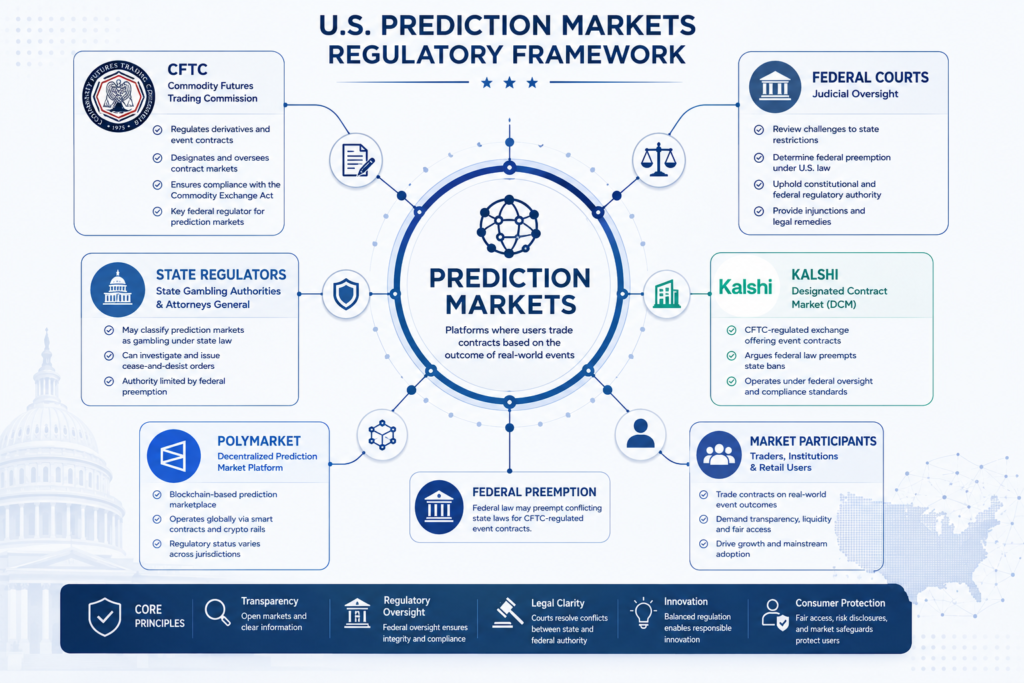
Kalshi’s Position
Kalshi maintains that it operates under federal oversight through the Commodity Futures Trading Commission (CFTC), which authorizes designated contract markets offering event contracts.
The company argues that federal approval limits the ability of individual states to prohibit products that already fall within an established national regulatory framework.
The court’s temporary order does not determine who will ultimately prevail, but it recognizes that the legal questions deserve full judicial review before enforcement actions proceed.
What It Means for Polymarket
Although Polymarket was not the primary plaintiff in the case, the ruling has drawn attention because similar regulatory questions affect prediction market operators across the industry.
Market participants are closely monitoring the litigation because future court decisions may shape how decentralized and centralized prediction platforms operate throughout the United States.
For crypto-focused prediction platforms, regulatory clarity remains one of the industry’s most important long-term challenges.
Why the Crypto Industry Is Watching
Prediction markets increasingly intersect with blockchain technology.
Many decentralized platforms use cryptocurrencies or blockchain infrastructure to facilitate trading, settlement, and transparency.
As governments continue developing digital asset regulations, legal decisions involving prediction markets may indirectly influence how regulators approach blockchain-based financial applications.
The outcome could also impact institutional participation, investor confidence, and innovation within decentralized finance.
What Happens Next
The court’s temporary injunction gives both sides additional time to present their legal arguments before a final decision is reached.
If Kalshi ultimately succeeds, the ruling could strengthen the argument that federally regulated prediction markets enjoy protection from conflicting state restrictions.
Conversely, if Minnesota prevails, states may gain broader authority to regulate or prohibit certain event-based trading platforms within their borders.
Either outcome is likely to influence future regulatory discussions involving digital finance, derivatives, and blockchain-enabled prediction markets.
Final Thoughts
The Kalshi Minnesota prediction markets case represents more than a dispute between one company and one state. It highlights the evolving relationship between financial innovation, digital assets, and government oversight.
As prediction markets continue attracting institutional attention and retail participation, courts will play a critical role in defining how these platforms fit within the broader U.S. regulatory framework. The temporary injunction offers only a pause in the legal battle, but its implications could extend well beyond Minnesota and shape the future of regulated event trading nationwide.