


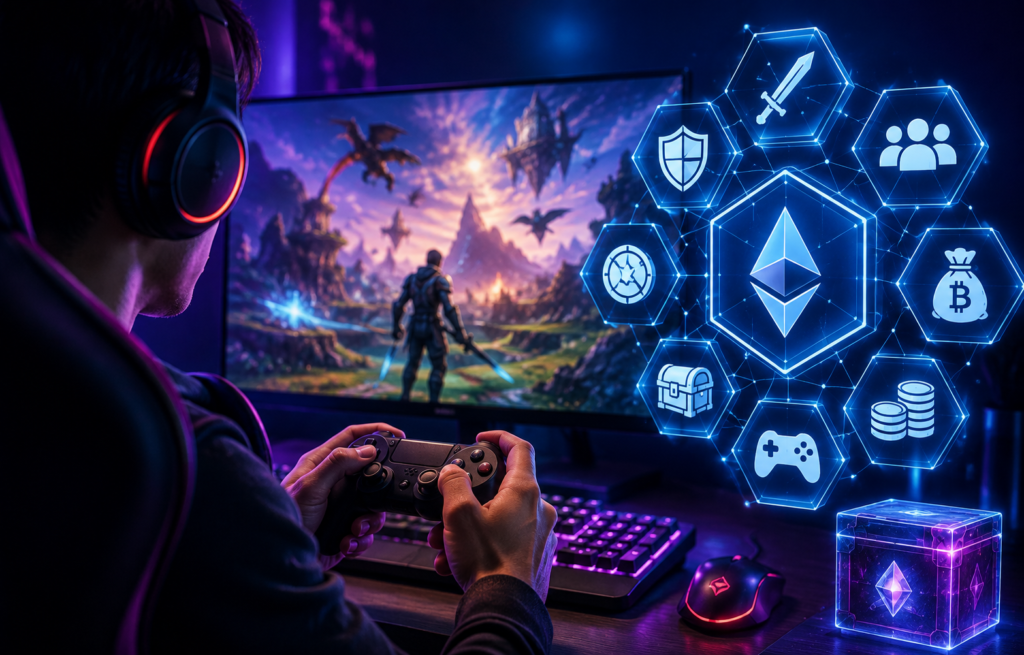
The web3 games industry is showing renewed momentum as developers shift their focus from token speculation to engaging gameplay and long-term player retention. After facing criticism during the previous market cycle, blockchain gaming projects are returning with improved mechanics, stronger economies, and better integration of digital ownership.
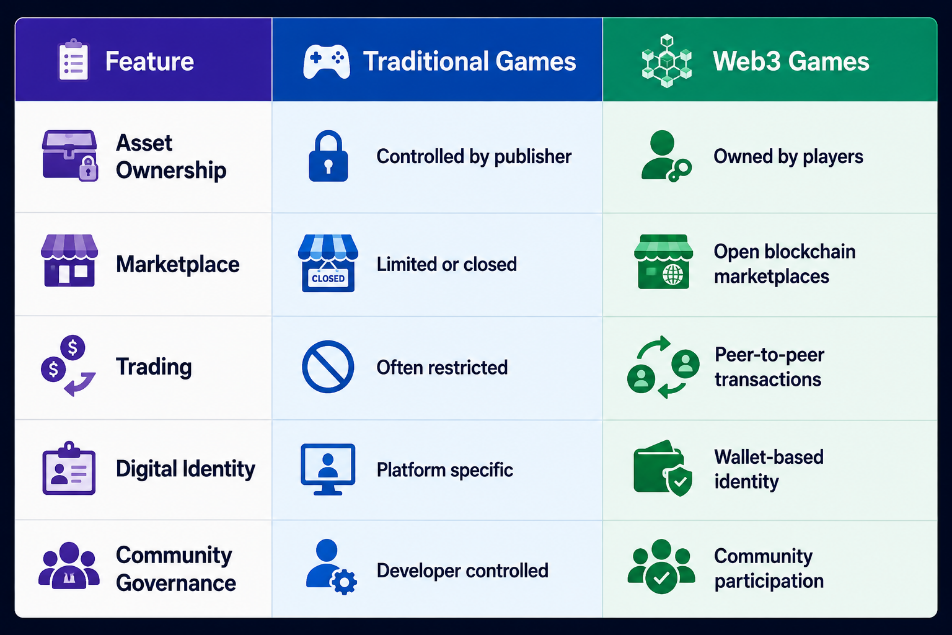
Web3 games are video games that use blockchain technology to give players verifiable ownership of in-game assets such as characters, skins, weapons, or virtual land. Unlike traditional games, where a publisher controls every item on its own servers, Web3 games let players trade, sell, or transfer those assets outside the game through decentralized marketplaces. The current generation prioritizes gameplay quality and sustainable economies rather than the play-to-earn token incentives that defined the previous cycle.
Unlike the early generation of play-to-earn titles, today’s Web3 games aim to balance entertainment with blockchain technology. This evolution is attracting both traditional gamers and crypto enthusiasts who want greater control over their in-game assets. As investment continues flowing into blockchain infrastructure and gaming studios, many industry observers believe Web3 gaming could become one of the strongest use cases for decentralized technology.
Key Highlights
- Web3 games are emphasizing gameplay over speculation.
- Digital asset ownership remains a key advantage.
- Blockchain technology enables transparent in-game economies.
- Developers are introducing sustainable reward systems.
- Institutional investment continues supporting gaming infrastructure.
Table of Contents
What Are Web3 Games?
Web3 games combine traditional video game experiences with blockchain technology. Instead of storing virtual items on centralized servers, players own digital assets such as characters, skins, weapons, or land through blockchain-based tokens.
This ownership allows players to trade, sell, or transfer their assets outside the game ecosystem, giving them greater control than in conventional online games.
Many projects also integrate decentralized marketplaces, community governance, and interoperable digital collectibles to expand the player experience.
Why Blockchain Gaming Is Improving
The first wave of blockchain gaming relied heavily on financial incentives. As token prices declined, many projects struggled to retain active users.
Developers have learned valuable lessons from that period.
Today’s Web3 games place greater emphasis on:
- High-quality gameplay
- Competitive multiplayer experiences
- Mobile accessibility
- Balanced in-game economies
- Long-term community building
By focusing on entertainment first, developers hope to attract mainstream gamers who value enjoyable gameplay rather than short-term rewards.
Why Investors Continue Watching the Sector
Blockchain gaming remains one of the largest segments within the Web3 ecosystem.
Investment continues flowing into gaming studios, Layer-2 networks, gaming infrastructure providers, and digital asset marketplaces. Improved scalability, lower transaction costs, and faster blockchain networks have reduced many of the technical barriers that previously affected player adoption.
These improvements create opportunities for developers to deliver smoother gaming experiences without requiring players to understand blockchain technology.
Challenges Still Remain
Despite recent progress, several obstacles continue to influence adoption.
Many gamers remain skeptical about blockchain integration, particularly when games prioritize monetization over entertainment. Regulatory uncertainty surrounding digital assets also affects some developers operating across multiple jurisdictions.
Sustainable token economies remain one of the industry’s biggest challenges. Successful projects must balance player rewards, asset scarcity, and long-term ecosystem growth without creating excessive inflation.
Why It Matters
The evolution of web3 games represents a broader shift in how digital ownership is viewed within the gaming industry.
Rather than simply purchasing virtual items that remain locked inside one platform, players increasingly expect greater flexibility, transparency, and interoperability.
For developers, blockchain technology provides new ways to build community-driven ecosystems while creating additional revenue opportunities through digital assets and decentralized marketplaces.
What Could Happen Next?
Several trends could shape the next phase of blockchain gaming:
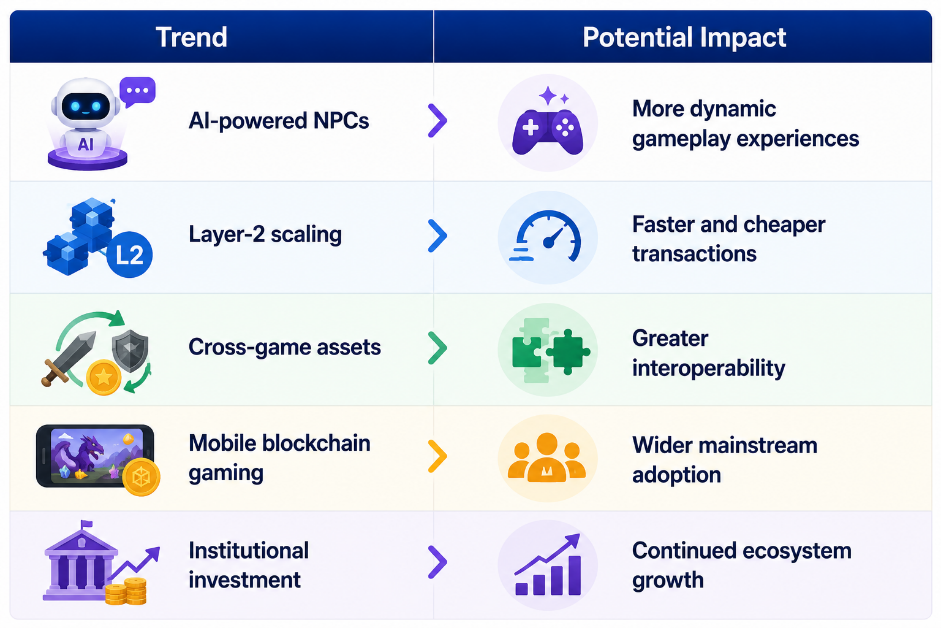
If developers continue prioritizing engaging gameplay over speculation, blockchain gaming could attract millions of new users over the coming years.
Conclusion
The web3 games industry has entered a more mature stage, focusing on sustainable ecosystems rather than speculative token models. Better gameplay, improved blockchain infrastructure, and genuine digital ownership are helping reshape public perception of blockchain gaming.
Although challenges remain, continued technological innovation and growing developer investment suggest the sector is steadily building toward broader mainstream adoption. For players, investors, and developers alike, Web3 gaming represents one of the most promising applications of blockchain technology beyond finance.
FAQs
What are Web3 games?
Web3 games use blockchain technology to give players ownership of in-game assets, allowing them to buy, sell, or trade digital items through decentralized marketplaces.
How are Web3 games different from traditional games?
Unlike conventional games where publishers control virtual assets, Web3 games let players own blockchain-based items that can often be transferred or traded independently.
Are Web3 games free to play?
Many modern Web3 games offer free-to-play options while providing optional blockchain features such as NFTs, token rewards, or digital asset ownership.
Why are Web3 games becoming popular again?
Developers are focusing more on enjoyable gameplay, sustainable economies, lower transaction costs, and user-friendly experiences rather than speculative earning models.
What should players consider before joining a Web3 game?
Players should evaluate gameplay quality, developer reputation, token economics, community activity, security practices, and the long-term sustainability of the project’s ecosystem.